This is also called introducing MITM (man in the middle) attack vector into your Apple ID and iCloud accounts thereby opening up potential breaches to your account.
“Would you like to compromise your account privacy security? Tap here to let your account be accessed by some random authentication server not maintained nor authorized by Apple somewhere”
Many people equate screen time or gadget use with addiction to smoking because they’re perceived as bringing far more harmful effects on health than any benefit but I’m a strong believer of context and what people (including kids) consume or use on their screens matter so much more than just the use itself because these devices can help if used the right way.
Separately, kids and adults also need to learn about control and ways to respond to certain triggers to reduce harmful effects.
The reports of Threads’s death have been greatly exaggerated. Just under 100 million monthly users in three months since launch is one hell of a feat.
Is the claim dubious? Anyone can certainly question that since they have yet to show additional information such as the highly coveted “unregretted minutes” a certain other billionaire CEO seems to prefer, but Business Insider was reporting just a week ago that Threads has 33 million daily active users so 100 million active users in a month does sound plausible.
But what about all those people who told us that Threads is a graveyard, that nothing is happening because their posts get no engagement? Well, are they the ones that logged in back in July or August once or twice and then return a few months later without posting anything in between? They have no idea what’s happening. How much interaction have they done in Threads, did they just post and expect responses or have they interacted with people? Have they been asking their friends and followers to check out the place and stick around for a while?
Threads have added so many features and functions between launch period and now that it’s become a full fledged social network that feels like it’s been around for years.
Sure, search is still limited to certain languages and markets, there’s no trending list, no lists, and no proper analytics, but there are separate feeds for Following and For You, can easily swap between accounts, log in on the web, post voice notes, follow every account mentioned in a single post all at once (makes Follow Fridays easier), quote posts, see basic stats per post, see quote posts and likes, follow and get notified of updates to any post for 24 hours, you can edit your posts and replies within five minutes of posting, and so on.
It’s still missing an API, however, which prevents many organizations, institutions, public figures, and businesses from using it with their social media admin tools. Perhaps that’s a big reason people think they can’t use it yet, but at nearly 100 million monthly users, it’s not a place for people to jump back in after months of absence and
ask if there’s anyone there, because it’s a thriving place.
That thing about the news? The one where Instagram chief Adam Mosseri said they’re not prioritizing or giving a leg up to news because they prefer people talk about other things? Yeah, that’s not a thing. News is absolutely what people share and talk about on Threads. Multiple major media organizations have found that Threads deliver far more traffic and engagement than expected.
Mosseri also reiterated today that they are working on landing in the EU as well as establishing early connections to ActivityPub and therefore federating or connecting to platforms like WordPress, Mastodon, and micro.blog in the next few months, not to mention the all important trends list that people have been shouting about.
There’s also evidence of more work already being done within the app but not yet ready for release, so while Threads may not be the place for real time updates yet, it is definitely sprinting forward.
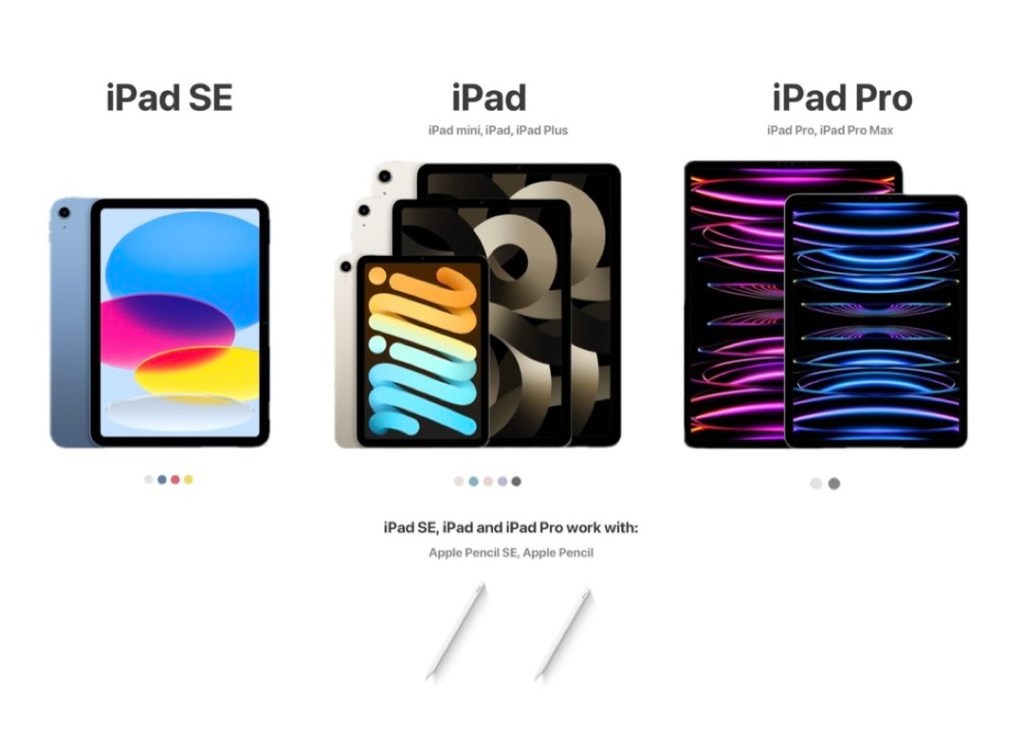
Let’s face it, the iPad line up is a little bloated if not confusing at the moment.
You have the 9th Gen iPad which carries all of the baggage of that generation’s iPad, the 10th generation iPad which overlaps so much with the iPad Air, the iPad Air itself which has lost all meanings thanks to the 10th Gen iPad, the iPad mini which can serve whole other categories of functions due to its diminutive size, and finally the iPad Pro that comes in two sizes.
Sebastiaan de With’s proposal here tries to align the product closer to the less confusing iPhone line up. While it doesn’t change the number of models, it gets rid of the 9th Gen and the original Pencil, introduces a low end iPad and adds a Plus model to the regular range.
I can agree with that and my details would be as follows:
When Apple introduces the 11th Gen regular iPad, the 9th Gen would be gone along with the original Pencil and any other lighting iPad accessory. That clears that table.
Let the low end iPad be the previous generation model with one or two color options, no cellular, and just one storage size because it’s meant to be the most accessible iPad that also serves the education market.
The standard iPad would include the mini and the Plus, all carrying the previous generation chipsets, obviously lower tech specs compared to the Pro, no high speed charging or connector just the widely acceptable one, and a single camera.
As for TouchID vs FaceID on the regular iPads, I lean towards TouchID unless they can lower the cost on that component.
The Pro will obviously be the flagship model with all the bells and whistles.
What about the Air? Right now the Air nomenclature is just that, a nomenclature. Functionally it serves as a confusing spot on the line up because the 10th gen iPad is too close to it but it carries a previous generation Pro chipset and features. They can keep the name for the regular iPad like how they kept the MacBook Air and Pro and got rid of the vanilla MacBook. That way they can have the iPad mini, iPad Air, iPad Plus all under the “regular iPad” class.
The Pencil will have two options, regular or Pro but there will be a hard separation. Only the Pro iPads can use either Pencil models while the non Pro iPad have to stick to the regular Pencil. That takes away the customer confusion. You want Pro features, get the Pro iPad.
Although maybe the Pro Pencil can work with the regular iPads but it just won’t have the Pro features enabled. It’ll be like a high speed charging or data cable delivering at low speed because the host or target device doesn’t support high speed.
I’m not addressing the nearly Apple Watch level overwhelming range of SKUs here because there’s going to be multiple colors, storage sizes, and cellular vs WiFi models to worry about.
The important element is is addressing the fundamental differences between the different iPad categories. Streamlining the product range this way will present a much more coherent set of options to the consumers.
People will have an easier time deciding which model to get especially those figuring out if they should get the 10th gen iPad, the Air, or the smaller Pro model, and retail staff won’t be tearing their hair out helping customers figure it out.
The Verge raises serious journalistic questions on the legitimacy of images taken using Google’s latest phones because the AI tools in Pixel 8 are much more readily available to manipulate them from the moment they’re taken to having them saved and published.
While the AI-adjusted images may have certain markers embedded, they may not be easily detected without specific tools unless it’s an obvious visual label permanently affixed to the image.
What is a photo? Is it a snapshot of a single millisecond in time? An imprecise memory of a moment? An ideal depiction of an otherwise imperfect brief period? How much is too much manipulation?
Smartphone captures from any brand are almost entirely manipulated after all with software adjustments converging to create the best version of a snapshot, but until now, they are still generally accepted as accurate photographs of a specific moment due to the lack of meaningful deviation from the truth.
When it comes to casual personal collection of photos and videos, these adjustments don’t or won’t amount to anything too serious but for journalistic purposes, these techniques advances pose questions and challenges.
Journalism outlets have guidelines to determine what photo or footage is acceptable to be considered a true capture and the results of a typical smartphone snapshot usually don’t change anything meaningful from the actual scene, but when the definitive capture no longer represents the truth, will the media authorities need to restrict the use of certain devices?
While manipulated images have made their way to major publications undetected until it was too late, they are still relatively rare.
Of course, photographers have always been able to manipulate situations by changing or adjusting the scene before capturing and sometimes only the presence of a witness or the existence of another image depicting the actual truth can serve as evidence of manipulation.
When the tools people use can significantly alter what was actually taken by the lens before a definitive record is made or saved into the camera’s memory, instead of after, journalism authorities and watchdogs will need to be even more vigilant.
Google is discontinuing its collaborative whiteboarding app, Jamboard, and will focus on third-party solutions like FigJam, Lucidspark, and Miro.
Jamboard will become read-only on October 1st, 2024, and all files will be permanently deleted by December 31st, 2024.
The company will help customers migrate to other whiteboard tools.
The Google Graveyard is probably among the largest and most occupied tech graveyards to ever exist, with so many released products serving essentially as public experiments with no guarantee of long term commitment. Just the other day they announced the end of the Google Podcast app.
The Jamboard was quite useful and popular among education and enterprise customers but instead of committing to it and spending resources to keep iterating, the company chose to end it when customers say competitors’ products serve them better. It’s one thing to hire fast and fire fast but release fast and cancel fast is an irresponsible policy that often affects a large customer base who may have made significant financial commitments.
Why bother releasing new products when you have no long term commitment? Why would you attract customers when all you do is blink at the competition? How can anybody trust a company like this?
This Twitter thread shows how far along artificial voices have come. For those who are familiar with Steve Jobs’ voice, the voice in these recordings is almost indistinguishable from the original. When you listen to them, you can be forgiven to think that it’s actually Steve Jobs saying these words, never mind that he’s been gone for more than a decade.
The only catch is that because the training set must have been taken from the many recordings of his Apple keynote speeches and product announcements, they all sound like he’s reading from a script or making announcements. None of the sentences sound natural the way someone would speak if they were having a regular conversation or answering questions but that’s not too difficult to overcome. The tools to make adjustments to AI generated voices to sound more natural already exists.
Here’s another example. The YouTube channel Star Wars Comics have started to experiment with using generated voices to narrate some storyline’s from the Star Wars comic books to keep their audience up to date with what’s happening in the comics. In one video, they used James Earl Jones’ Darth Vader voice to say the lines in the pages of the comic book. Their latest video voiced a conversation between Emperor Palpatine and Darth Vader from another issue in the recent Darth Vader comic book series, both using the generated voices of their real actors.
As many in the comments noted, while their voices sound indistinguishable from the original, the speech patterns make it obvious that these were generated. That’s because the voices weren’t adjusted to the way a person would speak in a proper conversation given in the situation. Again, these are relatively trivial changes that one could make using their AI voice generators.
While these may be little more than fun projects for the curious minds, the day when someone can create entirely fabricated recordings to manipulate the public is already here. You can already create fake videos of a person saying things that they never actually said, now the voices sound even closer to the original.
When deepfake videos started popping up in 2020, people knew that this was going to be a significant problem. People are already easily fooled by fabricated articles or stories and this is just going to make it far more challenging for people to fact check and verify the validity of recordings.
With all this talk of a 15″ MacBook Air I have one small concern that the screen resolution might stay the same as for the 13.6″ version at 2560×1664 or thereabouts. It doesn’t make a lot of sense but it’s not like they haven’t done it before.
It’s a long time ago and an entirely different executive team, but when Apple introduced the 14″ iBook G4 they kept the screen resolution at 1024×768, the same as the 12″ iBook and the 12″ PowerBook G4. Those who bought the 14″ iBook didn’t get any more work space than those who bought the 12″ version.
The larger iBook had a bigger screen size, bigger hard drive, a SuperDrive that burns DVDs and CDs instead of a Combo Drive that can read DVDs but only burns CDs, and 450 grams heavier, and a higher price.
Apple didn’t want to cannibalize the slightly more expensive 12″ PowerBook G4 which had almost identical specs and they certainly didn’t want the iBook to encroach on the Pro Mac space, so they couldn’t give the 14″ iBook a higher screen resolution.
There’s little chance that someone would pick the 13″ M2 MacBook Pro if Apple makes a 15″ Air available, because frankly, why would you? Even the 13″ M2 MacBook Air is a slightly better machine overall and with a slightly lower price.
Will a 15″ Air pose a threat to the 14″ Pro? Not in the slightest. The 14″ and 16″ Pro machines carry the much more powerful M2 Pro or Max chips and they also have much higher resolution screens with the XDR display. They also have more connectivity or ports. The Air lineup will not have those.
Weeks after someone saw code inside the Instagram app referring to paid verification, Meta today formally announced their latest copycat feature, the paid blue checkmark.
Like pretty much every major product that Meta offers, the blue checkmark originally came from somewhere else, in this case, Twitter. Now that Twitter is charging for it, Meta can’t resist doing the same but they added their own twist.
Just like Twitter’s version, you’ll get the all important blue badge, increased visibility and reach, and exclusive features, but you’ll also get personal customer support, something that Twitter can’t offer because Elon fired everyone already.
Meta’s checkmarks are more expensive than Twitter’s. Even more expensive than paying for Netflix, Disney+, or HBO GO. One month of Meta Verification costs the same as Disney+ Hotstar for one entire year. Think about that.
Twitter charges US$11 per month from mobile apps and $8 from the web, while Meta charges $15 from mobile apps and $11 from the web.
Meta’s paid checkmarks are available only in Australia and New Zealand for now, though, so they make you crave for it with the oh so good FOMO and envy brewing up inside of you.
But my favorite one, though, is Tumblr. For a one time payment of $8 you get not one but two badges all at once and if that’s not enough, you can buy and display up to 12 pairs of badges! They now come in all rainbow colors too, not just blue, so it’s so much fancier and cooler because you can pick and choose which colors you want. You pay once and you keep it forever. Or until you delete your account. Love those guys.
I’ve shared my thoughts about microblogs vs proper blogs a few times over the years but even after more than 20 years of blogging and more than 15 years of microblogging I still haven’t landed on a definitive position.
It’s evident that the era of Twitter has rendered blogs almost exclusively for more niche segments. The ability of microblogs to deliver almost instant readership and feedback to a piece of writing gives their authors relentless dopamine shots that keeps them around for much longer periods.
Blogs allow for more verbose and nuanced posts but when microblogs allow for that to happen as well, that makes you question the necessity of blogs other than the more obvious ones such as easier indexing, categorization, search, and discovery.
I guess it’s a matter of choosing between delivering more complete thoughts on a faster conversational platform and putting them down on your own space that you can have better control over.
Sometimes I wonder what would happen had something like Pownce had prevailed instead but that would require an alternate world in which the public chose Gowalla over Foursquare. Simplicity seems more likely to win over more complete or elaborate executions in our world after all.





 AuliaSays