The NY Times changed the headline of Jamelle Bouie’s opinion piece to be much less direct.

I haven’t been a Times subscriber in years and haven’t read anything from there for a while. The more I see this sort of behavior from their editorial team the more I’m convinced the Times is not worth the attention it’s getting. By no means it can be referred to as the paper of record.

The NY Times is a lot like Twitter. It’s an ongoing and escalating dumpster fire but it has so many eyeballs and attention people keep publishing and reading stuff there and triggering more complaints about them.

I get that the second headline is more clickbaity to draw in more curious readers (and page views) because the first headline will definitely be rejected by those who aren’t interested in the issue or will reject anything defending trans rights, but when you read Parker Molloy’s piece, it tells you that the headline change is much deeper than that. It’s more plausible that it’s a deliberate act against the trans community even if they try to argue it’s not the intention.

The NY Times have responded to the claims of being anti trans with a statement published by Nieman Lab. If ever there was a statement that nobody but the writer believes in it, this would be it.

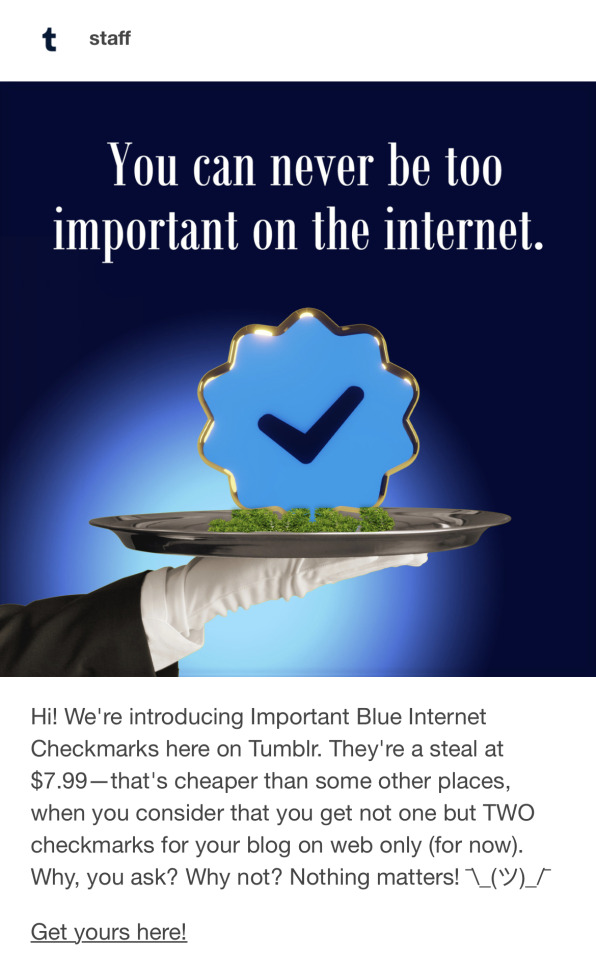
What the heck, Tumblr? 😂😂😂

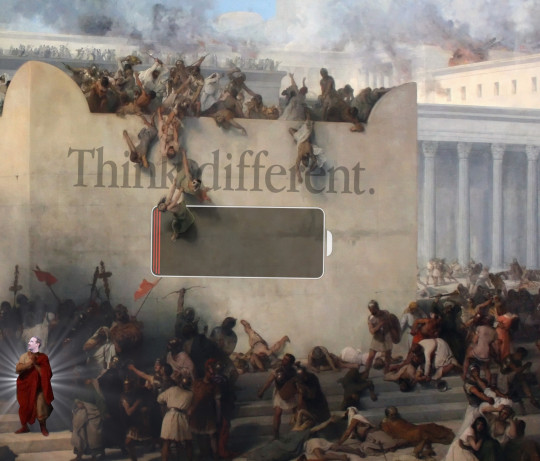
When Facebook came for your battery, feudal security failed

mostlysignssomeportents:

When George Hayward was working as a Facebook data-scientist, his bosses ordered him to run a “negative test,” updating Facebook Messenger to deliberately drain users’ batteries, in order to determine how power-hungry various parts of the apps were. Hayward refused, and Facebook fired him, and he sued:

https://nypost.com/2023/01/28/facebook-fires-worker-who-refused-to-do-negative-testing-awsuit/

If you’d like an essay-formatted version of this post to read or share, here’s a link to it on pluralistic.net, my surveillance-free, ad-free, tracker-free blog:

https://pluralistic.net/2023/02/05/battery-vampire/#drained

Keep reading

Who Wants to Pay for a Checkmark?

Hey, look who’s taking after one of the most unhinged individuals to ever run a company and dipping their toes into making identity verification a commercial product?

The entire point of account verification is all about confirming that the profile account represents who it claims to be. The part about having to be a notable person or organization was a side effect of the notion that only public figures needed to have their account verified to avoid impersonation.

The fact is anyone or any organization could be impersonated for any reason as notability needs not be on a national, let alone global, level.

If Meta is truly aiming to drive revenue out of account verification then it’s not about notability anymore. They should just make it like Tumblr and charge it for kicks because nobody knows if you’re a dog, who cares as long as you pay? The initial roll out of the revamped Twitter Blue went exactly as everyone outside of the company would expecte.

If account verification is about identity they can do it by enabling rel=“me” by way of a website that the person or entity controls.

The rel=“me” identity verification attribute is used to establish a link between a website and a person’s or organization’s profile on another site. This will assert that the entity owns or runs both the website and the profile on the other site.

Basically it lets other websites or services know that you are who you say you are without having to submit further proof of identity such as your government ID and saves them from the arduous process of manually verifying every profile created on their service and saves you from the repetitive process at each online service.

However, because there’s no central authority that actually verifies this attribution it can create a single point of failure if the reference website gets hijacked, leading to security issues such as identity fraud.

Between the lack of central authority and chaos through impersonation accounts, essentially it comes down to which problem they are more willing to deal with. And if say it costs $5 a month to have a check mark next to your name, that’s potentially hundreds millions maybe billions of dollars of additional annual revenue. Who’s gonna say no to that?

Before you know it every corporate social network will charge for a check mark and you’ll be spending more per month than your streaming subscriptions combined.

Twitter ends all free public API, switches to paid access

“Putting a cap on free API usage could also stop firms working around detecting the spread of misinformation on Twitter.”

That right there is the money shot. Misinformation is much more freely distributed today on the platform than at any time last year without the full trust and safety team and council working to suppress them. Then again the definition of what constitutes misinformation seems to have changed within the company.

The other point is why would any self respecting developer jump right back in after being suddenly shut out without prior or even any official communication on the sudden change of policy?

Anybody who still trusts the company to do anything right must be kidding themselves.

If anything, third party developers might be even more inclined now, if not highly encouraged, to develop for other platforms that offer free or open source API *cough*Mastodon*cough*.

Mastodon isn’t the only open platform in play that takes advantage of the ActivityPub protocol. There are plenty others such as Friendica, Pleroma, CalcKey, etc., that connect through this protocol, which means the playground for software developers and designers is wide open. Even WordPress, Tumblr, and Flickr have ActivityPub on the roadmap for this year.

There’s far more interest now on the federated networks or the open social web than ever before and networks that stay closed are going to miss out.

I wish Tumblr had a much easier and faster way to invoke the action items from the Activity list. I don’t want to have to open each account just to block them when it’s obvious they’re spam or troll accounts. I’d be really happy if they add a long tap or a horizontal swipe to reveal buttons to report as spam, block, or other actions.

Instagram founders Kevin Systrom and Mike Krieger have reteamed to launch Artifact, an AI driven personalized news feed that also lets you and your friends discuss about each story you share.

Casey Newton, who broke the news, calls it TikTok for text. From his description it sounds like AI driven Flipboard with chat.

As you can see from the screenshot registration is limited to US phone numbers for the time being. They’re clearly in testing mode and managing traffic. The whitelist, iPhone exclusive period, and pretty interface create a FOMO mindset among those who can’t get in yet.

It’s the stereotypical Silicon Valley product launch. Create a pretty app and generate widespread hype and FOMO by limiting access and riding on the news wave and public chatter.

From John Gruber’s take it’s not a promising start, maybe it’s far too early to judge. Right now it’s closer to a newsreader than a social app of any kind, and maybe that is the whole point and the conversation aspect is just a minor feature.

One Fediverse App to Rule Them All?

A few days ago I said, “should one build an all encompassing Activity Pub app? I don’t think so because it would end up as a big confusing hot mess. Apps optimized for individual services are still the way to go  in my opinion.”

This was in reference to the different platforms like Friendica, micro.blog, and Pixelfed. I don’t think one app should be able to cover all of the platforms because it would be a terrible app – jack of all trades master of none, thing.

However, having used Akkoma, Takahe, and Misskey, it seems that while there are platforms that serve different purposes and functions, a lot of the fediverse platforms can be considered different versions of the same thing.

Like Twitter, Pownce, Jaiku, and BrightKite (OMG, anyone remember BrightKite?), they all were meant to have the same core function but grew differently with different features because the founders each had different priorities and what they considered important. Twitter was probably the most basic of them all.

For all the platforms that share a large overlap like Mastodon, Pleroma, Akkoma, MissKey, CalcKey, etc., it might make sense for a single app like Ivory, Mammoth, or Ice Cubes, to accommodate them all or for the platforms to implement more shared API and increase interoperability. This should allow people who are on the overlapping platforms to use the same app and increase the market for the app.

Not sure about the technical requirements to have all the similar platforms be much more interoperable but it looks like it’s entirely possible.

dduane:

Okay, now I’m feeling vindictive

This is worse, in its way, than the pornbots.

Here’s something that turned up in my ask box just now.

…So. You’ve all seen these. Some of them are genuine. Lots aren’t.

Here’s where their message leads:

…Okay. The first warning sign: this account is about 3 days old.

But the second: searching on the details of the plea for help via Google, what do we find but…

…Poor Macaroni has repeatedly been hit by cars, and has repeatedly suffered busted femurs, since 2015.

“This,” as the saying goes, “starts to look like carelessness.” :/

Taking advantage of the kindness of strangers this way is vile… and plainly there’s no shortage of people willing to indulge.

So: yeah, I’ll be delighted to help the OP get some more traction on this! You betcha. By:

Blocking. Reporting. Reporting to PayPal as well. And dropping @staff a note, when I have a moment. Because allowing this stuff to prosper here just invites more people to try it on. :/

…Pass the news around, friends. (“And call it Macaroni.”)

The things online stores do

I bought two boxes of masks that were supposed to be delivered yesterday. They didn’t arrive.

When I remembered this afternoon to check for the masks, my brother told me there was a package earlier on the bookshelf. It was a sealed black plastic bag. Ok, not boxes, which means I needed to check the app and see where my order was because the package felt like they could be clothes inside, not boxes of masks. When I checked the app it said they’ve been delivered. But there were no boxes delivered today, just the one plastic bag.

So I went to open the bag. And as I was opening it, I wondered if they took out the masks and repacked them without the boxes. I mean, okay, maybe they’re being sus about it or just didn’t want to send the boxes to make it a smaller package and save money.

I poured the contents out and sure enough, four small plastic bags full of masks. Suspicions almost confirmed. Right? 

Wrong.

Inside the bag there were the two boxes the masks were supposed to be inside of. But they were flattened. THEY WERE FLATTENED!!! These two boxes were looking freshly flat as if they just came out of the goddamn box production line! 

Geniuses, fucking geniuses, these people. Save money on the delivery and making them easier to transport by unboxing the masks and flattening the boxes.

Props to the sellers, man.