
2007 -December 2012: 500 million iOS devices sold.
October – December 2012 – 75 million devices sold
Conclusion: Apple sold, during the Q1 2013’s 13 weeks, 15% of all iOS devices ever sold. 15% in three damn months.
Probably a good reason for why Apple’s share price fell. LOL
Tag: Tech
It ain’t heavy, it’s my Lumia 920
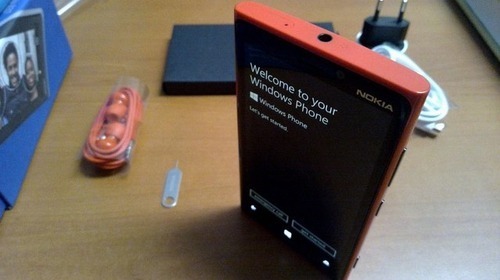
I’ve ditched the iPhone and picked up a bright Ferrari red Lumia 920. I’ve had three iPhones since 2008 and 2013 may well be the first in which I may not own one, at least not a working one. I’ve been using the original iPhone for three years until I left it in a cab early last year, which led me to get myself a used 3GS and later an iPhone 4. The latter of which I promptly left, also in a cab in August of that year, just three months after I bought it, so back to the 3GS I went before it kicked the bucket a few months ago.
Background
The death of my 3GS made way for my Lumia 800, which was given to me by Nokia at the start of the year, to become my primary phone. I had enjoyed using the Lumia from time to time and it had become my primary email device while the 3GS was what I use for everything else. Honestly, loading emails on the 3GS running iOS 5 and later iOS 6 had become so slow it was unbearable.
I’m one of those people who prefer not to deal with phone calls, don’t give out their phone numbers, and refuse to use SMS unless it’s absolutely necessary. Practically all of my communications are done through online text messaging such as email, Twitter, and the occasional Facebook Messenger and WhatsApp, so actually not having a phone works just fine for me.
My iPod touch could have served me well enough if only it had a SIM card without the phone component, just like the iPad had since 2010. Speaking of which, my iPad is the wifi-only first generation model, so the Lumia 800 doubled as a wireless router while I’m on the move. The iPad mini would actually be perfect but it won’t be available locally until some time next year, so that can wait.
In the meantime, I’ve been so enamored by the Lumia 800 that when my dreaded suspicion that it won’t be receiving the upgrade to Windows Phone 8 came true, I had to go and get a replacement for it. Between the 820 and the 920, the decision came down to whether the size of the 920 would be a hindrance to my daily use of it.
Relatively speaking
The Lumia 800 honestly has the perfect size for a mobile phone. It has just the right width and it’s slightly taller than all the older iPhones but not as tall as the iPhone 5. The size doesn’t require anyone to use both hands when using the phone which means typing on it was a breeze. Unfortunately Nokia decided to go large with this year’s first batch of the Windows Phone 8 devices, so that comfort zone had to go away.
The Lumia 820 is about the size of the older 900 but handles better due to the curved edges of the screen. The flat edge screen of the 900 was a design blunder. It made the already large phone even more uncomfortable to use as the curved sides of the phone meet very hard edges of the screen. I could rant more about the 900’s undeserving release but I’ll spare you the tangent.
The 820 is a “coodabeen” phone. It could have been much better, it could have been the straight up replacement for the 800. It could have been a phone of its own that doesn’t look like its trying to steal customers from the 920 for a whole lot less. It could have been a contender, it could have… ah you know. It should have had 16GB of storage instead of 8, the screen should have been narrower. It’s too expensive for what it offers. The upcoming Lumia 620 would kick its ass when it comes to value for money. The 820 looks great but it’s too close to the 920 to be able to stand on its own.
The 920 is a much bigger phone than the 900. It packs optical image stabilization, 8.7 megapixel PureView camera, large built in storage, a really fast processor, high capacity battery, built-in wireless charging, the works. Maybe it was a component issue that pushed the company towards a larger phone, maybe it was a conscious design decision that saw the market looking for size. In any case, the 920 is a monster of a phone. It’s an aircraft carrier.
He ain’t heavy
The Lumia 920 is incredibly large. It’s about the same size as a Galaxy SIII but a little bit wider and because it’s rectangular instead of heavily curved like the Galaxy, it looks larger as well. Whereas I had problems using the Galaxy S III because of the size, the 920 is much easier to use because Windows Phone and its apps sensibly put all of the action buttons either at the bottom or not on fixed positions so they can be scrolled easily to within reach. Android’s interface is just like iOS as their on screen button placements tend to be fixed, which make large or tall phones awkward to use.
The weight of the 920 may seem very substantial compared to other phones. At 185 grams, it’s the heaviest among the top smartphones in the market. The iPhone 5 is 112 grams, the iPhone 4S is 140 grams, Galaxy SIII is 133 grams. Even the Lumia 820 is far lighter at 160 grams. Don’t let this get to your head though. Once you got to use the phone on a daily basis, you wouldn’t really notice the weight. Your wallet is probably heavier than the 920.
Don’t kid yourself, you’re not going to pull a muscle trying to use this phone. Unlike an iPod touch or an iPhone 5, you’re definitely going to notice if it’s missing from your pocket and because it doesn’t suffer from anorexia, you’re not going to worry about breaking it in half. It’s not fragile.
Ultimately the size and weight of the 920 are issues that can easily be set aside. The 920 is simply a great phone. It’s downright incredible. The built is solid, the screen feels pretty tough and very responsive, you can store a lot of songs, videos, and photos with 32GB of storage.
Wireless charging wasn’t a deal breaker for me and to be honest I probably won’t be getting the wireless charger. NFC would be very handy if there are more people and places using it. For the moment, it won’t get much use. It’s a solution looking to get used.
Camera
What got me sold on the 920 is the promise of a great camera and because Windows Phone 7.5 had brought a very capable camera software that’s easy to use and practical. Naturally I expected the same from Windows Phone 8 but I wasn’t prepared for the changes that it had brought in terms of software.
This phone’s drawcard is the rear-facing camera. Yes, Nokia simulated the 920’s image stabilization function when it showed off a video at the announcement of the phone instead of actually using it to record the sequence, but the camera does hold true. The floating lens definitely help reduce the shaky motion produced when holding the phone by hand to record video.
The lens also allows more lighting to enter which produces brighter pictures at low lights. The resulting photos are generally much improved compared to the ones taken with a Lumia 800. It produces much brighter photos with relatively sharper details and less noise. Photos produced by this 8.7 megapixel camera come out looking really great although in terms of colors, the iPhone in my view still produces them more accurately than any of the Lumia phones.
The rear-facing camera can produce a very narrow depth of field which makes macro shots stand out that much more although slight barreling (curving of the edges) occurs in close ups of flat objects but most people probably won’t notice it much on casual shots. Unfortunately there is a bug that caused some photos to lose details.
There is a software update to fix the camera bug as well as delivering many other enhancements to the operating system but while it was released for Lumia owners in North America, apparently International versions of Lumia 920 won’t receive the update until at least February 2013.
The front-facing camera is great for shooting videos and making video calls but not much to talk about for self pictures. The screen flickers when shooting in low light and it produces a significant purple tint over the photo. It’s handy to have but it’s very mediocre.
Camera software
Nokia provides a range of photo apps to accompany the rather basic Camera app on Windows Phone. These apps definitely add to the experience in taking and sharing photos using a Lumia.
The way it worked in the Lumia 800 with Windows Phone 7.5 was that all of Nokia’s camera enhancement and add on software which came in the Nokia Camera Extras application got placed inside the camera app, accessible from the top side of the menu. This makes them very convenient to access. The menu items are neatly arranged on a selection screen making them easy to spot.
On Windows Phone 8, the enhancements are separate apps that you have to download individually from the Nokia Collection inside Windows Phone Store. Fortunately they do end up being accessible in the Lenses section of the Camera app, so that’s not much of a loss, but the add-ons work differently and I’m not sure it’s for the better. In addition, the self timer is missing.
Cinemagraph can be a fun toy to play with to produce those moving photos in which a part or parts of the photo move as the rest remain still. It can be difficult to create the perfect cinemagraph so it’ll take a lot of practice but once you get the hang of it, it beats the pants of having to learn how to use Final Cut Pro or After Effects to create them.
Nokia Creative Studio is one photo editing app that has changed in purpose. Back on Windows Phone 7.5 Creative Studio let people add all sorts of effects and filters. It had warp effects, adjustment comparisons, visual stylings, as well as the regular filters. It was a fun app.
The new Creative Studio for Windows Phone 8 discarded all of those and turned it into a no-frills photo editing software. It lets you impose filters on photos, adjust brightness, color balance, vibrance, crop, rotate, and remove red eye. Is it less useful? Perhaps, depending on your intentions, but it’s definitely a lot less fun to use. Losing the ability to directly compare the original with the edited version of a photo is regrettable.
Photo Beamer is Nokia’s solution to on-site photo sharing. Lumia owners can share their photos to another device by opening the photobeamer website on a browser on the target device and holding the Lumia in front to capture the resulting QR code which will turn the Lumia into a controller for the slide show. This would be useful for presentations or to share photos during family reunions.
Smart Shoot is an app that lets you take five consecutive shots of the same scene, person, or a group of people and based on those five shots, erase unwanted objects and select the best faces possible. The app will then stitch the photos together and come up with a refined photo. You can save the set and come back to it at any time if you want to different versions of the same scene.
Other Nokia apps
While the Camera and Camera Extras play a significant part in selecting the Nokia Lumia over Windows Phones from other manufacturers, Nokia’s in-house collection of apps also add a major factor in the decision.
Other Windows Phone manufacturers haven’t been as aggressive as Nokia in terms of providing accompanying software and because these Nokia apps are made available for free for all Nokia Lumia phones, it’s a no brainer. Although Nokia Maps is the default maps app for Windows Phone, many of Nokia’s other apps are only available for Nokia phones. They’re not essential and in some cases unnecessary but they can be very convenient to have.
Nokia City Lens is a city discovery app which uses augmented reality to display places of interest around your location. You can look up banks, restaurants, accommodation, entertainment venues, landmarks, and shopping centers.
For those who commute, Nokia Drive provides offline driving directions, learns your routes and driving habits, scans for traffic condition to help you plan your route, while Nokia Transport provides information on bus stops, train stations, and where available, public transport schedules and routes.
Nokia Xpress is like Opera mini which is not available for Windows Phone. Xpress is a web browser that compresses the amount of data used when opening web pages. The app also has a news reader of sorts which it calls Magazine. It pulls in ten of the latest entries from your subscribed sites and displays the first paragraph of each with a link to the full article. There’s also a saved pages section for articles that you want to keep.
It’s a pretty great phone
The one thing I haven’t discussed so far is the battery. In the week since I’ve had the phone, it’s given me mixed results. Sometimes, with only half the battery remaining, I could get up to 6 hours even while I use the phone to check Twitter using the mobile site and send text messages over WhatsApp. Other times, a full battery lasts only 8 hours because I had tethering on while also using the phone to scan Twitter using the native apps.
Battery performance will also be affected by the active background tasks used by apps such as email, Twitter, text messaging, news apps, weather apps, Flickr, and so on, not to mention the signal strength from your mobile network carrier because in places with weak network signal, the battery will be pushed to deliver more power to maintain connection. Using WiFi wherever available though, would save battery use.
All in all, the Lumia 920 is definitely a phone to consider when buying a new phone. The combination of a solid hardware, great camera, free comprehensive software collection from Nokia, and Windows Phone 8 make the 920 one of the best phones of the year.

First tweet from my new iPad/Surface/Kindle/Nexus! i.imgur.com/cg6O5.jpg
— Andy Baio (@waxpancake) December 26, 2012
Google and the competition
This morning I found out that Google is removing support for Exchange Active Sync. This essentially cuts off proper Gmail services to Windows Phone. As the creator of Exchange, Microsoft isn’t keen on supporting the open alternatives to Exchange services but without such support, all consumers considering Windows Phone will hear is, “Windows Phone doesn’t do Gmail” or “Gmail sucks on Windows Phone” and then they’ll go running to iPhone or Android.
Google is cutting off Microsoft from its services because it knows that Windows Phone is a potential threat down the line. Cut it off early and Google has a chance to limit or even stunt its growth.
Don’t think you’ll be safe on iOS. By brushing aside Windows Phone, Google will only have iOS to deal with and currently it’s cozying up real tight to it, offering apps and services that work really well on Apple’s platform to get people to use them instead of Apple’s own. Before you know it you’ll be using all of Google’s apps on iOS which will give Google close to total market dominance.
If it can’t get certain people to use Android, it will get them to use as many of its services as possible that make up Android. If the threat is small enough, it will move to shut it down. Let me point you to Acer which wanted to use Alibaba’s Aliyun OS before Google issued a threat to expel Acer from the Android gang if it went ahead.
The only reason Google hasn’t harassed Amazon for its Kindle Fire is because it will face antitrust issues in the US and Europe if it does. Google has refused to acknowledge Kindle Fire as an Android variant despite Amazon having built its OS from Android and at this point, it can’t go further than that.
Once people who don’t use Android predominantly use Google’s services, Google will get them to jump in and switch to Android and when the number is high enough, it will cut off access from the remaining major competing platforms, which at this point may well be iOS only.
This is a real danger time for companies that aren’t immediate Google partners. In five or so years, without a strong competitive landscape, we’ll likely return to the days of Windows dominance over desktop computers with Android playing the Windows role.
Launching iPhone 5 at 7 Eleven might not be such a bad idea after all
Indonesia’s third iPhone carrier plans to launch iPhone 5 at two 7 Eleven outlets in Jakarta. The absurdity of the idea probably hides the genius behind this launch strategy by Indosat. Unlike in many other countries, Indonesia’s 7 Eleven outlets are set up as more than just a mini mart. They are actually quite large, about the size of regular Apple Stores (seriously, no kidding), they have seating areas, many have a second floor dining area and a balcony, free wireless Internet, and highly popular among teens, youngsters, the middle class.
Hamid Muhamad argues that Indosat’s unorthodox strategy is quite brilliant. People can buy drinks, food, and smoke, at 7 Eleven while they wait in line, but the primary reason he says, 7 Eleven provides Indosat with a completely different market segment from what malls offer and by targeting that specific segment, Indosat does not have to compete directly with the other carriers for customers. As he says, teens who frequent 7 Eleven are the kind who can not only afford DSLR cameras but use them casually on a daily basis. These kids have (their parents’) money to burn and they want the latest and coolest gadgets.
All the carriers are aiming for the middle class but by virtue of their corporate image, their voice and data plans, their choices of launch venues, they are already aiming at different markets within the middle class segment and by steering clear of the malls, Indosat may be on its way to carve its own iPhone market.
Telkomsel may grab the parents, business executives, corporate types, the loyal, long term Telkomsel customers, XL Axiata appeals to the young upstarts, the hip, the digitally aware and the value seekers, while Indosat is aiming at the teens and young adults with money to burn.
On top of that, launching at 7 Eleven got people talking about it on Twitter. It even got me writing about it. It’s genius.
*note: Indosat picked two 7 Elevens to launch iPhone 5, one is at Teluk Betung and another at Bintaro. The 7 Eleven at Teluk Betung is located directly at the entrance to Grand Indonesia, one of the most prestigious malls in Jakarta right in the middle of the city with high foot and car traffic and it’s within walking distance from a bus stop. I’m not familiar with the one at Bintaro unfortunately.
Launching iPhone 5 at 7 Eleven might not be such a bad idea after all
First impressions of the HTC Windows Phone 8X
HTC is launching its Windows Phone phones here well before the others and having used the 8X briefly, it’s very hard to resist. It’s slim, incredibly light, and looks very, very attractive. The rubbery enclosure is a godsend for those who tend to drop their phones since it gives a very good grip. The camera on the 8X works really well on its own, pictures come out great and the macro can be really tight, but Nokia just has better camera support.
Sure, it’s thinner and lighter than the Lumia 920 and arguably has better speakers but it doesn’t offer the cool and fancy camera tools that Nokia has, there’s no Nokia Drive, which means no turn by turn navigation, and no CityLens. 8X definitely wins on style but the substance fails to carry it over the line. 920 on the other hand has far more substance, really nice style, but a tad on the bulky side. Let’s hope the bulkiness is due to having a bigger battery.
I still need iOS for Path, Tumblr, Tweetbot, FaceTime, Google+, WordPress, Flipboard, Instapaper, YouTube, Skitch, and a host of other daily apps that I use. Android would win over Windows Phone in this regard since it has most of the apps above aside from Instapaper, Tweetbot, and FaceTime, but I can’t stand using Android.
YouTube doesn’t seem to have recognized Windows Phone as a viable mobile device. Not just yet. There’s no proper native YouTube app yet to let people watch videos without having to resort to the browser and this stops people from watching certain videos that require the native app for ad display purposes.
The Galaxy S III put me off large screen phones because it’s just so difficult to operate using only one hand and the iPhone 5 is a tiny bit awkward to use due to the height. However, it turns out that these usability issues are strictly tied to the design of the software. The nature of Windows Phone software seems to eliminate this problem almost entirely. Very rarely do you have to reach up to the top quarter of the display to activate particular functions. Most of the controls on Windows Phone apps can be found at the bottom or near the center of the screen.
HTC has a winning chance here with its Windows Phone options but I’d wait for the Lumia 920 or even 820. The 8X is a great phone that’s only let down by the fact that the Lumia phones have much better camera tools and exclusive apps. – Read on Path.

Dear Google, it’s 2012, stop asking people to install Flash. Yes, I’m in the HTML5 trial program.

Microsoft rebrands Windows Phone Marketplace to Windows Phone Store
There is no longer a market, simply a store
At least “Store” may have a shot of fitting on the screen. I’m sure some people will wonder what happened to “rketpla” though.
Samsung wanted the Galaxy S to be more like the iPhone
In short, the evaluation report makes the case that the Galaxy (identified here as the “S1″) would be better if it behaved more like the iPhone and featured a similar user interface. And it appears to play directly into Apple’s charge that Samsung “slavishly copied” the iPhone.
Is this document the smoking gun?
You’re welcome to love Android and hate Apple. Just don’t be fooled into thinking Samsung are the good guys
Mic Wright at the end of a long story about how Samsung’s operation is rife with corruption.
 AuliaSays