
At the recent Lumia 530 launch in Jakarta, employees of Microsoft Devices kept correcting journalists who referred to the company as Nokia. They’re really eager to disassociate themselves with their old employers despite the products still bearing that name, although according to recent reports, that branding is going away very soon, and perhaps for the better.
Tag: microsoft
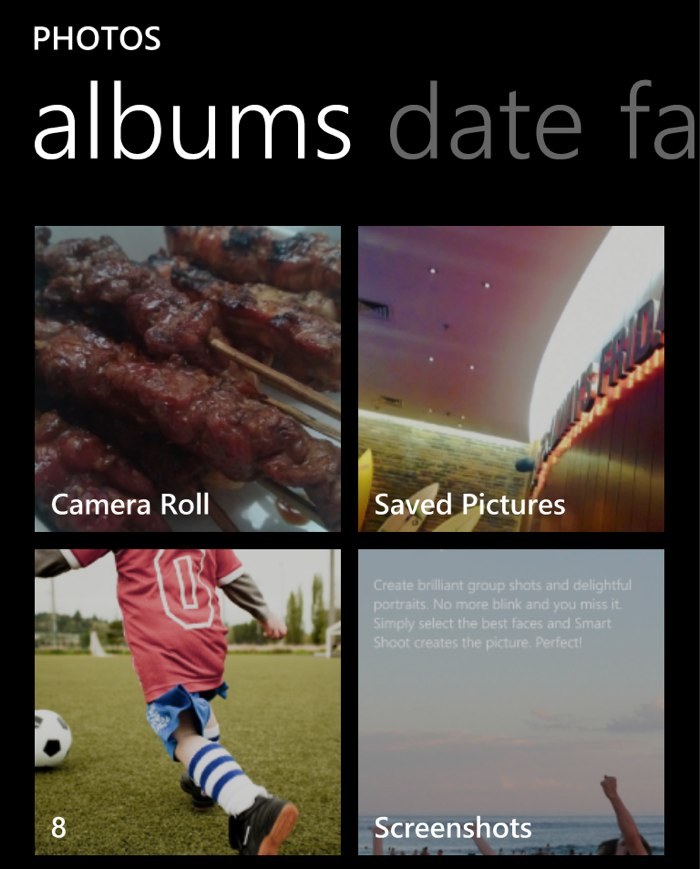
Windows Phone 8 has an album for Screenshots
Since Windows Phone 8 has the ability to take screenshots by pressing the power button and the home button together (sounds familiar?) the photos have to go somewhere. On iOS, these go to Camera Roll, mixed with photos taken using the device’s camera, causing a lot of grief to those who prefer to have their screenshots collected separately. On Windows Phone 8, Microsoft has made it so that screenshots go to their own album and these don’t get uploaded or synchronized to SkyDrive, at least not automatically. You have to manually send photos to SkyDrive from the Screenshots album.
The Saved Photos album is for photos or images generated by apps. Unless it’s a photo edited directly from Camera Roll using the built in editing tools, edited photos end up in this album. These don’t get synchronized to SkyDrive unless you make it so. If you do, the Saved Photos folder gets stored under Pictures on SkyDrive.
Images manually saved to SkyDrive from these albums go to a folder called Mobile Uploads, which you can also access from the Photos app on Windows Phone 8.
Yes it can get a little confusing but basically all photos except those in the Screenshots album get synchronized to SkyDrive if you activate the option.
Google and the competition
This morning I found out that Google is removing support for Exchange Active Sync. This essentially cuts off proper Gmail services to Windows Phone. As the creator of Exchange, Microsoft isn’t keen on supporting the open alternatives to Exchange services but without such support, all consumers considering Windows Phone will hear is, “Windows Phone doesn’t do Gmail” or “Gmail sucks on Windows Phone” and then they’ll go running to iPhone or Android.
Google is cutting off Microsoft from its services because it knows that Windows Phone is a potential threat down the line. Cut it off early and Google has a chance to limit or even stunt its growth.
Don’t think you’ll be safe on iOS. By brushing aside Windows Phone, Google will only have iOS to deal with and currently it’s cozying up real tight to it, offering apps and services that work really well on Apple’s platform to get people to use them instead of Apple’s own. Before you know it you’ll be using all of Google’s apps on iOS which will give Google close to total market dominance.
If it can’t get certain people to use Android, it will get them to use as many of its services as possible that make up Android. If the threat is small enough, it will move to shut it down. Let me point you to Acer which wanted to use Alibaba’s Aliyun OS before Google issued a threat to expel Acer from the Android gang if it went ahead.
The only reason Google hasn’t harassed Amazon for its Kindle Fire is because it will face antitrust issues in the US and Europe if it does. Google has refused to acknowledge Kindle Fire as an Android variant despite Amazon having built its OS from Android and at this point, it can’t go further than that.
Once people who don’t use Android predominantly use Google’s services, Google will get them to jump in and switch to Android and when the number is high enough, it will cut off access from the remaining major competing platforms, which at this point may well be iOS only.
This is a real danger time for companies that aren’t immediate Google partners. In five or so years, without a strong competitive landscape, we’ll likely return to the days of Windows dominance over desktop computers with Android playing the Windows role.
First impressions of the HTC Windows Phone 8X
HTC is launching its Windows Phone phones here well before the others and having used the 8X briefly, it’s very hard to resist. It’s slim, incredibly light, and looks very, very attractive. The rubbery enclosure is a godsend for those who tend to drop their phones since it gives a very good grip. The camera on the 8X works really well on its own, pictures come out great and the macro can be really tight, but Nokia just has better camera support.
Sure, it’s thinner and lighter than the Lumia 920 and arguably has better speakers but it doesn’t offer the cool and fancy camera tools that Nokia has, there’s no Nokia Drive, which means no turn by turn navigation, and no CityLens. 8X definitely wins on style but the substance fails to carry it over the line. 920 on the other hand has far more substance, really nice style, but a tad on the bulky side. Let’s hope the bulkiness is due to having a bigger battery.
I still need iOS for Path, Tumblr, Tweetbot, FaceTime, Google+, WordPress, Flipboard, Instapaper, YouTube, Skitch, and a host of other daily apps that I use. Android would win over Windows Phone in this regard since it has most of the apps above aside from Instapaper, Tweetbot, and FaceTime, but I can’t stand using Android.
YouTube doesn’t seem to have recognized Windows Phone as a viable mobile device. Not just yet. There’s no proper native YouTube app yet to let people watch videos without having to resort to the browser and this stops people from watching certain videos that require the native app for ad display purposes.
The Galaxy S III put me off large screen phones because it’s just so difficult to operate using only one hand and the iPhone 5 is a tiny bit awkward to use due to the height. However, it turns out that these usability issues are strictly tied to the design of the software. The nature of Windows Phone software seems to eliminate this problem almost entirely. Very rarely do you have to reach up to the top quarter of the display to activate particular functions. Most of the controls on Windows Phone apps can be found at the bottom or near the center of the screen.
HTC has a winning chance here with its Windows Phone options but I’d wait for the Lumia 920 or even 820. The 8X is a great phone that’s only let down by the fact that the Lumia phones have much better camera tools and exclusive apps. – Read on Path.

Microsoft rebrands Windows Phone Marketplace to Windows Phone Store
There is no longer a market, simply a store
At least “Store” may have a shot of fitting on the screen. I’m sure some people will wonder what happened to “rketpla” though.

What Microsoft’s announcement on Monday really boils down to.
Barely Scratching the (Microsoft) Surface

Microsoft announced its own brand of tablets on Monday in Los Angeles. Called the Microsoft Surface, it comes in two variants, one running Windows RT, powered by an ARM processor, another running the full Windows 8 Pro environment with an Intel processor on board. If the name sounds familiar, it’s because Microsoft Surface was a touchscreen table (yes, table) which was released in 2007. The current version of that table has been renamed PixelSense.
How is the Surface different from the iPad? To begin with, it has a built in kickstand, a 10.6 inch high definition screen with a 16:9 widescreen aspect ratio, and has a Windows logo on it (some people might miss this fact, really). It also has a USB and microSD ports as well as digital video connectors. Microsoft showed off the accompanying screen cover which doubles as an integrated keyboard and touchpad as well as a pen for the Pro version. Surface for RT will come in 32 and 64 GB versions while the Pro model gets a 64 and 128 GB options.
With Surface, Microsoft has decided to enter the hardware space for personal computers and compete with its own hardware partners in delivering devices running Windows 8. Previously it was more than happy to deliver just the software while letting partners figure out hardware manufacturing and assembly, but ever since the tablet market ran away without caring about Windows, Microsoft probably felt that it needed to rectify the situation.
Perhaps having seen its partners failing at seizing the tablet market with previous versions of Windows, Microsoft thought it had to show the way, despite Samsung, Lenovo, and Acer, having already shown their versions of the Windows 8 devices.
Nevermind that other competitors to the iPad have essentially failed so far, Microsoft had to give this a chance. In fact, it’s probably a good time for Steve Ballmer and co. to jump in because there hasn’t yet been a strong competitor to the iPad.
 Samsung can boast all it wants as a leading Android tablet brand but its sales figure over one year is easily dwarfed by Apple’s iPad sales in one quarter alone. The PlayBook is the laughing stock of the market, while Amazon’s Kindle Fire and Barnes & Noble Nook aren’t really available globally and they’re positioned more towards the electronic book reader category anyway.
Microsoft claimed that Surface for Windows 8 Pro, which happen to weigh nearly 1kg, will deliver the same performance that is expected out of ultrabooks as it runs off an Intel Core i5 processor. This puts the Pro version in a rather awkward situation. Is it an ultrabook competitor or is it a tablet contender? Will consumers go for the novelty of this new PC or will they go with the safer options? Until the pricing and battery life are revealed, answering these questions is impossible.
Surface for Windows RT on the other hand, is clearly a pure tablet place. Sure, it has the same ports and keyboard options as the Pro model but with the weight at 676 grams and its OS limited to Metro-only apps, this device is squarely positioned in the tablet category. Will it be able to grab market share away from the competitors? It certainly seems that way but as with the Pro version, Microsoft has yet to reveal the pricing nor the battery life.
In addition, tablets tend to come with options for cellular data but this is something that Microsoft did not mention as well. Reports from various market surveys say that an overwhelming majority of tablets are used at home and within range WiFi, at least in the United States, which means a cellular option may not necessarily be that attractive. Will Microsoft make such an option available regardless? We can only wait until it makes a more meaningful announcement.
 Everything so far about the Surface seems pretty sweet but it’s difficult to deny the fact that this is all no more than posturing because Microsoft simply felt that it needed to announce products before it’s actually ready to make such an announcement. At the event, none of the invited attendees were given a fair chance to try out the devices. It’s like being shown a gallery of hot racing cars without being able to test drive, or standing in front of a candy shop and not allowed to taste any.
Surely Microsoft will announce the remaining details in the coming months but until then, we can only scratch the Surface (well, not really, the Surface is supposedly scratch proof) and any in depth analysis can only go so far without the full details being made available.
What’s clear from this announcement however, is that Microsoft will now be competing with its partners but whether it’s going to take the Google Nexus approach and make the Surface the flagship devices by which all other Windows 8 devices will be measured against, remains to be seen.
Microsoft Unveils New Windows Logo

Speaking of change, Microsoft changed its Windows logo again. This time from the now familiar flag to an actual window which harks back to the logo of Windows 1 but adopting the new Metro look introduced in the company’s Windows Phone 7 operating system for mobile.
Microsoft bids farewell to IE 6
Even its creator can’t wait until it goes away completely. If you’re still using IE 6 (or even IE5 -shudder) time to take a look at your browser policy and follow the lead. The world has moved on to far better things, if you haven’t, what’s taking you so long?
So as we kick off 2012, we call on the rest of the world – make it your new year’s resolution to end IE6

screen grabs of the siri vs tellme video. the important parts.
 AuliaSays