Facts aren’t enough: Why journalism needs to find a new way to reach the public

Journalism is in a crisis of accountability. Too many reporters are taking the easy route: regurgitating statements from politicians and officials without pushing back, questioning, or even glancing beneath the surface. It’s like they’ve decided that the press briefing is the new gospel, letting the people in power control the narrative and dodging any real scrutiny. This isn’t just lazy; it’s dangerous. When journalists stop asking the hard questions, they become complicit in misleading the public, and they fail democracy.

But here’s the other side of the crisis. Even when journalists are on their game, digging deep, presenting hard facts, and keeping things objective, a big chunk of the public isn’t even listening. Instead, they’re tuned into their own personal version of reality, patched together from social media rumors, conspiracy theories, and “alternative facts” that suit their biases.

A growing number of the public are increasingly immune to traditional reporting, whether it’s coming from newspapers, digital publications, or the nightly news. We’ve reached a point where the truth itself is somehow up for debate, no matter how well it’s documented because the other side have been presenting their versions more convincingly.

So what’s the answer? For starters, journalists need to get back to actually holding people accountable. Enough with the rehashed sound bites. Journalists must turn up the heat, pull apart the claims made by those in power, and lay bare the inconvenient truths, even if they’re messy or complicated.

But let’s be honest: reporting the facts clearly and objectively isn’t enough if they’re just going to be ignored. The media can’t afford to keep shouting into the void. To get through to people, journalists need to shake up the way they’re telling these stories.

Conventional formats aren’t cutting it anymore, readerships are down across the board and publications have been shutting down all around the world. Maybe it’s time to lean into platforms and techniques that disrupt echo chambers rather than reinforcing them.

This could mean turning to data visualizations that make complex issues impossible to ignore or creating interactive stories that don’t just tell people what’s true but show them, letting them see the process and judge for themselves. We need formats that combine the immediacy of social media with the depth of investigative reporting, something more visceral, less dismissible.

And this is where the press need to admit: current methods of engaging with audiences aren’t working for everyone. If journalists want people to trust the media again, they’re going to have to earn it in new ways. That might mean getting closer to the communities they cover and the audience they serve, being more transparent about the reporting process, or even tackling popular myths and misinformation head-on instead of just waving them off as fringe ideas.

Journalism’s mission isn’t just to report facts, it’s to make those facts matter. They can’t give up on that mission just because some people would rather live in a reality of their own design. It’s time for the media to level up, to be tougher, sharper, and more innovative in how to tell the truth. Because the stakes are too high for the facts to keep getting ignored.

When Reporters Become Collateral in an Unpopular Executive Decision

So here we are: The Washington Post announced it won’t endorse a candidate this US election, and the fallout is immediate. Readers are canceling subscriptions in droves, about 200,000 and counting according to NPR, and reporters are left scrambling on social media, pleading for them to stay. As a former journalist, I feel for the reporters caught in this mess. This isn’t just an editorial call they can shrug off. It’s a hit to their credibility, their income, and their professional mission.

To me what’s important isn’t whether a media makes a political endorsement because we live in a time when these decisions don’t matter like they used to. Media endorsements don’t carry the same weight as in previous decades. What matters to me is when they did it. I said on Threads the other day,

The issue isn’t that they will not endorse but that there’s a decades long tradition to endorse one candidate over another and not just for the presidential candidates, it’s often local candidates too. That the boards of two major US papers already drafted the endorsements only to be spiked by their billionaire owners is what matters because it’s too close to Election Day. They could have announced the stance weeks or months ago but they didn’t and now they’re causing a scene.

The timing is everything here. Only 11 days before the election, the paper killed a planned endorsement of Kamala Harris, the Democratic candidate, saying it’s a return to their “roots” of neutrality, as they did until about 50 years ago. But the newsroom is in uproar. Famed reporters like Bob Woodward and Carl Bernstein have called the move cowardly. Others, like former editor Marty Baron, went further, saying it’s a betrayal of democracy itself. Many readers opined in light of the decision that the Post’s slogan, “Democracy dies in darkness”, wasn’t a slogan but a mission statement as the newspaper has decided to tun the lights off to let democracy stumble in darkness.

Meanwhile, there’s Jeff Bezos, the billionaire owner, defending the decision as “principled.” He argues it’s about restoring trust in journalism. But here’s where things get complicated. The same day the Post cancels its endorsement, Bezos’s space company, Blue Origin, had a meeting with none other than Donald Trump. Even if it’s a coincidence, it’s an unfortunate look, especially considering that endorsements were a standard practice at the Post until… well, about five minutes ago. When Woodward and Bernstein broke the Watergate scandal at the Post in the ‘70s, then owner Katherine Graham stood tall defending their decision to run the story and expose the illegal actions of President Nixon which led to his resignation. Bezos on the other hand, has no such conviction, fearing retribution by Trump in case the 34x convicted felon ended up winning re-election, and jeopardizing his government contracts and other opportunities for his companies.

And it’s not just the Post. Earlier this month, the Los Angeles Times made a similar choice, dropping its own endorsement after its billionaire owner, Patrick Soon-Shiong intervened. His daughter, who supposedly has no influence at the company, defended it as a “family decision” tied to frustration over Harris’s stance on the genocide happening in Palestine. Curiously, a feature series titled, “Case Against Trump” was canceled by the newspaper at his behest. Yet again, we’ve got a big decision, tied to editorial independence, happening at the last minute with little transparency.

USA Today has joined the ranks of papers sitting this one out. However with outlets like The New York Times, Rolling Stone, and the Philadelphia Inquirer still endorsing candidates, it seems the media landscape is splitting down the middle on this issue.

Readers, for their part, feel they’ve been sidelined. Canceling subscriptions is one of the few ways they can register their frustration with decisions made behind closed doors. But the fallout isn’t falling on Bezos, it’s falling on reporters who had no part in the decision. Now, they’re essentially forced into being spokespersons for an editorial shift they didn’t ask for, defending a stance that most of them probably would have argued against.

So, what’s the way out? Instead of reporters bearing the brunt of management’s hasty decision, maybe they could actually join with the readers on this one. Push back internally. Make it clear that if big decisions like this one are going to reshape their relationships with readers, they need to be more than last-minute top-down calls. They could demand a seat at the table, a voice in decisions that impact their integrity and the trust of their audience. Some members of the editorial boards and newsrooms at both the Post and the LA Times have made their strong opinions known even to the point of resigning.

In the end, the future of journalism doesn’t just depend on what’s reported, it depends on how these decisions are made. If the Post, the LA Times, and other major outlets want to regain trust, they need to do more than make calls from the top. Credibility is built on transparency, respect for journalists, and a genuine acknowledgment of the readers who make their work possible.

The threats facing press freedom in Indonesia are only increasing

The decline in press freedom under President Joko Widodo’s administration and the growing concerns about President Prabowo Subianto’s approach to the media are alarming.

As Sofie Syarief’s article in Fulcrum highlights, Jokowi’s government set a troubling precedent, particularly with Ministerial Regulation 5 (MR5) and other policies that gave the state more control over what could be published online. These regulations, under the guise of content moderation, opened the door to censorship, weakening Indonesia’s democracy. The move to fine digital platforms for failing to remove “prohibited” content further undermines the press’s ability to hold power accountable. She recalled her own experience being censored:

MR5 has numerously been used to force social media sites to take down content deemed as “breaking” the law. While journalistic products are protected by the Press Law, social media posts from individuals are not. In early October 2023, for instance, X/Twitter informed the author in an email that it received a request from Kominfo to take down one of the author’s tweets. The tweet cited an article from Indonesia’s largest daily, Kompas, criticising Widodo’s alleged misuse of intelligence to spy on political parties. After the author appealed to X and protested to the ministry, the then deputy minister claimed that their report against the tweet was due to “human error”.

Prabowo’s track record does little to inspire hope for improvement. His past threats against the media, particularly during his 2019 Labor Day speech, show a worrying disregard for press freedom. If the proposed revisions to the Broadcasting Law and Police Law that she mentioned in the article are passed, the situation could worsen, empowering authorities to silence dissent under the guise of maintaining security. The potential for abuse is clear, especially with a compliant Parliament likely to rubber-stamp these changes.

Indonesia’s press and civil society must rally together to defend their freedoms. As she points out, a free press is crucial in a functioning democracy, and with the current trajectory, Indonesia risks losing that. The need for solidarity and a strategic response has never been more urgent.

Digital media repression is an emerging global trend and an imminent threat to Indonesia’s declining democracy. Indonesian media have been criticised for their overall failure to adequately function as a political watchdog, especially given the campaign to restore Widodo’s dented public image. At present, Indonesia’s civil society is far from consolidated and cannot meaningfully challenge the government. If democracy is to stand a chance under the new administration, Indonesia’s press and civil society need to stand together to strategise their fight against autocratic legalism and to hold power accountable.

Pay-to-Play Media: A Crisis for PR, Journalism, and Credibility

I’m coming into this rather late as I only just now read the post by the founder of Maverick Indonesia PR agency, Ong Hock Chuan, on what’s happening in the media and public relations space as well as his follow up.

As a former media person who also spent time among public relations professionals, I find what’s apparently happening quite concerning and is symptomatic of an existential crisis rooted in an unsustainable business practice brought on by a drastic change in the industry landscape. Unfortunately the effect of this is a clash of two intertwined and interdependent industries that used to be in a much more congenial relationship.

As a result, the once clear distinction between earned and paid media is blurring, as media companies apparently increasingly demand payment for coverage. This phenomenon, driven by declining traditional advertising revenue, poses serious challenges for PR professionals, media outlets, and the public. What was once ethically questionable is becoming commonplace, forcing PR practitioners to navigate an environment where credibility and integrity are under constant threat.

From the perspective of PR professionals, this shift threatens the core of public relations: earned media. Earned media, by its very nature, has always been a hallmark of credibility because it reflects the independent judgment of the media outlet. However, when media companies start asking for payment in exchange for coverage, that credibility crumbles. PR professionals now face a difficult choice: play into this pay-to-play system and sacrifice ethical standards, or risk losing valuable visibility for clients.

This dilemma is exacerbated by media companies’s financial struggles. As digital platforms siphon away advertising dollars and consumer attention, traditional outlets scramble for new revenue streams. Asking brands for payment in return for coverage has unfortunately become one of those strategies, reflecting an existential crisis for the media industry.

The consequences are profound and far-reaching. When media companies accept payment for editorial content, their role as impartial gatekeepers of information is compromised. Audiences today are more savvy and skeptical than ever before. They can often detect paid content, and once trust is broken, it’s difficult to repair. For media outlets, short-term financial gains come at the cost of long-term credibility and relevance.

For PR practitioners, the erosion of earned media puts the entire profession at risk of losing its ethical foundation. The job has always been to present clients strategically without crossing into paid promotions. When media companies demand payment for coverage, PR professionals are backed into a corner: abandon ethical guidelines or stand firm on principles, potentially losing valuable placements.

This practice raises significant questions about journalistic integrity. If coverage is determined by who can pay, what does that mean for the future of news? Will underfunded yet important initiatives be left out of the media narrative? Will the media’s watchdog function be diluted if reporting can be bought?

At the core of this issue is a crisis of trust. Both PR and journalism are built on credibility, now undermined by financial desperation. PR practitioners must secure coverage without compromising ethical standards, while media companies must remain financially viable without sacrificing journalistic integrity. The question isn’t just about funding sources, but whether audiences will continue to trust either the media or the brands paying for placement.

This trend is dangerous for all involved. Media companies may find short-term relief in paid content but will lose audience trust. PR professionals may secure more coverage by paying, but risk their own credibility and that of their clients. Most importantly, the public loses when news becomes a commodity rather than a public service.

This crisis demands a reevaluation of priorities. Media companies must innovate to find sustainable revenue models that don’t compromise their core mission. Perhaps media companies need a complete overhaul in how they are structured and how they approach the business. 

PR professionals must reaffirm their commitment to ethical practices, even in the face of pressure to secure coverage at any cost. Both industries must recognize that their value proposition lies not in short-term gains, but in maintaining the trust and respect of their audiences and clients.

Public relations and media companies are not adversaries and they should never be. The challenge is finding a mutually sustainable and beneficial business model in the face of an advertising revenue drain by global tech platforms. The same platforms that are increasingly abandoning their need of media companies as content producers because the audience have been conditioned to read only what’s published on the platforms.

Ultimately, demanding payment for media coverage is a symptom of deeper problems. Left unchecked, it will erode the foundations of both professions creating a world where all media coverage is suspect and public relations is synonymous with paid advertising.

Google Testing Removal of News Tab

With Australia, Canada, and Indonesia passing laws or regulations requiring platforms to pay for news links and the US having introduced the Journalism Competition and Preservation Act last year, removing the News tab looks like Google’s response to avoid having to pay link tax to media companies.

The News tab is only missing for a limited group of users for the moment. It is a test after all and I still see it when I use Google search.

Media Companies are Suckers for Punishments 

I don’t understand why the media keep insisting on posting to this platform when they themselves admit that traffic from social media links have been dropping, and especially on X, they don’t bring significant audience.

The disdain that Musk has over media companies, especially ones that don’t kowtow to his whims, as well as his calls to publish directly on his platform or be deprioritized, should warrant enough reasons for them to cease using the platform as a traffic funnel.

They are not welcomed nor do they gain anything from staying around. As if having article titles removed from posts was not enough of a sign that Musk isn’t keen on driving traffic to news sites.

There’s no shortage of options for content distribution these days so pulling back from one  isn’t going to make a lot of difference.

commodifiedsouls:

ecumenicalseeker:

cryaotichiddles:

I found this, so I thought I’d chime in on this.

YOU HAVE GOT TO BE KIDDING ME

Yup, it really happened.

theatlantic:

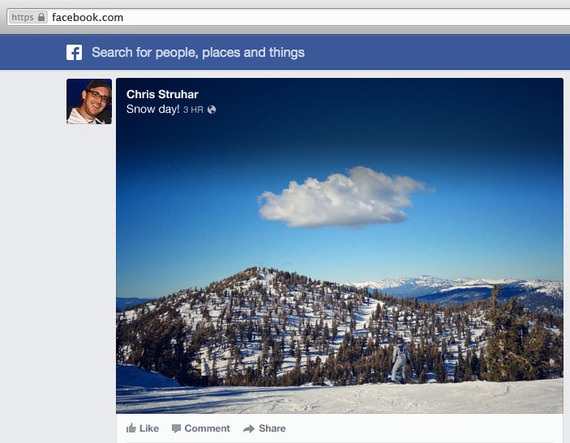
The Facebook Effect on the News

Around this time last year, I considered writing a story claiming that Facebook and Twitter were the new “homepages” for news on the Internet. It was going to be about how, if the Web had ripped out the article pages of newspapers and magazines and scattered them to the wind, Facebook and Twitter had pinched them from the air and stacked them in easy, vertical columns that were becoming our new first-look sources for the day’s events.

A year ago, social networks are the new homepage seemed like an (almost) original observation. Today, it’s just a boring fact.

In the last twelve months, traffic from home pages has dropped significantly across many websites while social media’s share of clicks has more than doubled, according to a 2013 review of the BuzzFeed Partner Network, a conglomeration of popular sites including BuzzFeed, the New York Times, and Thought Catalog.

Facebook, in particular, has opened the spigot, with its outbound links to publishers growing from 62 million to 161 million in 2013. Two years ago, Facebook and Google were equal powers in sending clicks to the BuzzFeed network’s sites. Today Facebook sends 3.5X more traffic.

Read more. [Image: Facebook]

Supposed leak from WSJ about the Apple tablet

The WSJ does it again. Special coverage from Yukari Iwatani Kane and Ethan Smith about the supposed upcoming tablet from Apple. Since the WSJ is behind a pay wall (and it’s a really long piece) the essence of the story can be found in this post from Business Insider.
Some highlights:

Apple wants to "reshape businesses like textbooks, newspapers and television much the way his iPod revamped the music industry—and expand Apple’s influence and revenue as a content middleman.“

Apple wants to launch a web-based version of iTunes by June.  This would allow people to use the store without special iTunes software.  The service would also have distributed "Buy” buttons all over the web.

Tablet is designed to be shared.  May come with facial recognition camera.  Users may be able to leave virtual sticky notes for other users

Posted via email from A Geek Dad’s Log | Comment »