Here’s why a 15-inch MacBook Air would be a good addition to the Mac lineup

With all this talk of a 15″ MacBook Air I have one small concern that the screen resolution might stay the same as for the 13.6″ version at 2560×1664 or thereabouts. It doesn’t make a lot of sense but it’s not like they haven’t done it before.

It’s a long time ago and an entirely different executive team, but when Apple introduced the 14″ iBook G4 they kept the screen resolution at 1024×768, the same as the 12″ iBook and the 12″ PowerBook G4. Those who bought the 14″ iBook didn’t get any more work space than those who bought the 12″ version.

The larger iBook had a bigger screen size, bigger hard drive, a SuperDrive that burns DVDs and CDs instead of a Combo Drive that can read DVDs but only burns CDs, and 450 grams heavier, and a higher price.

Apple didn’t want to cannibalize the slightly more expensive 12″ PowerBook G4 which had almost identical specs and they certainly didn’t want the iBook to encroach on the Pro Mac space, so they couldn’t give the 14″ iBook a higher screen resolution.

There’s little chance that someone would pick the 13″ M2 MacBook Pro if Apple makes a 15″ Air available, because frankly, why would you? Even the 13″ M2 MacBook Air is a slightly better machine overall and with a slightly lower price.

Will a 15″ Air pose a threat to the 14″ Pro? Not in the slightest. The 14″ and 16″ Pro machines carry the much more powerful M2 Pro or Max chips and they also have much higher resolution screens with the XDR display. They also have more connectivity or ports. The Air lineup will not have those.
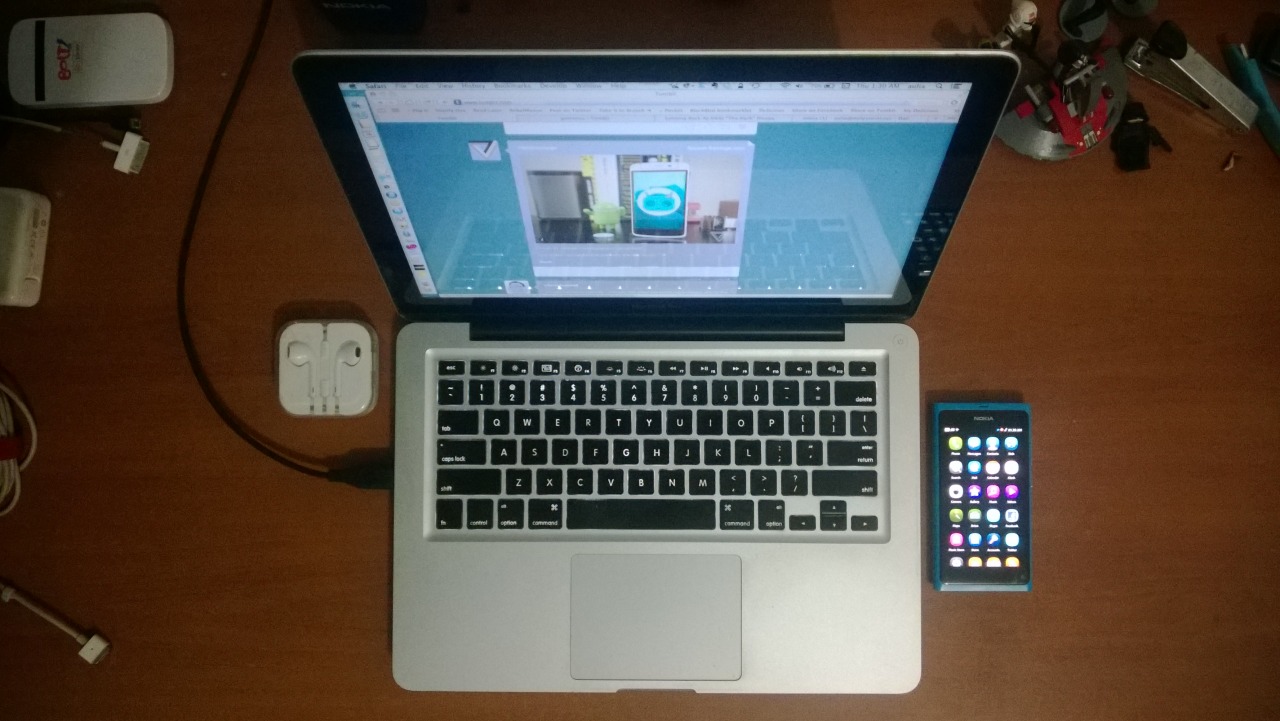
To ask that every piece of modern electronics is designed to allow the tiny fraction of hackers to upgrade is the height of hubris, unreasonable, and a huge imposition on everyone else that has no desire to ever crack the case. All that ‘upgradability’ ends up making the product cost more and be more susceptible to failure. Catering to the fringe is not the way to make good products. Making the best product you can for a low price is the way to make good products, even if it means eliminating upgradability and home repair.

MacBook Pro: The Next Generation

Apple SVP Worldwide Marketing Phil Schiller took to the stage at Worldwide Developer Conference earlier today to introduce the new MacBooks with Intel’s latest processors. The MacBook Air and the MacBook Pro received the usual and expected regular internal upgrades, but Apple’s biggest notebook announcement was the next generation MacBook Pro.

The new MacBook Pro is a 15.4 inch notebook weighing only 4.5 pounds and only 0.71 inch thick. The screen is a retina display with 2880 * 1800 pixels for 220 ppi, roughly double the sharpness of the screens on the MacBook Air and MacBook Pro. 

The next generation MacBook Pro is powered by a 2.3 GHz quad core i7 Intel processor, 8GB of RAM, GeForce GT 650M with 1GB of video RAM, 256 GB of flash storage, upgradable to 768GB. As far as ports are concerned, it has MagSafe 2, HDMI out, USB 2 and USB 3 ports, and two Thunderbolt ports. Firewire 800 and Ethernet ports have been relegated to dongle status. With this update it looks like Apple is quietly discontinuing the 17-inch MacBook Pro.

As expected, there is no longer an optical drive and since this is the next generation MacBook Pro, don’t expect optical drives in future MacBook Pro updates. Apple has been known to keep legacy models though, such as the white MacBook which Apple quietly discontinued earlier this year but it remains to be seen if Apple will keep selling MacBook Pros with optical drive once the next generation model become the standard, and if so, for how long.

To support the new MacBook Pro’s retina display, Apple has updated its built in Mac OS X Lion, the iWork and iLife suites as well as its professional apps. Adobe and AutoDesk are also updating their apps to support the retina display.

This introduction of the new MacBook Pro marks the end of the monstrous 17" model. The next generation MacBook Pro starts from $2199.