Twitpic is shutting down

Twitpic founder Noah Everett prefers to shut down his six year old service rather than retract its trademark application to the USPTO as demanded by Twitter. The service will shut down on September 25 and users will be given an opportunity to export all of their hosted images prior to the date.

Twitter had opposed the trademark application which was filed in 2009 and threatened to refuse access to Twitter’s API but a company spokesperson said that Twitpic was actually allowed to continue to operate using the name, just not as a trademarked name because Twitter considers that a violation of its own.

There doesn’t seem to be a business case that can be made out of a Twitter-specific photo hosting service especially after Twitter rolled out its own, so the legal threat about the name seems like a perfect excuse Everett needs to shut down without needing to disclose the real reason if there was one.

Some years ago a competing service called tweetphoto was acquired and renamed as Lockerz. The acquiring company failed to find a viable business model in the Twitter photo hosting service and is now gone, having been acquired by a Chinese company a few years ago and no longer deals with Twitter.

When Twitpic was not asked to be one of the partners for Twitter’s own photo hosting service a few years ago Everett went and built a competing microblogging service called Heello which mimicked Twitter but it soon faded into irrelevance.

If Everett is so hung up with wanting to trademark the name more than anything, it smells fishy. It’s a bit of a shame because Twitpic’s approach was different to Twitter’s own although in terms of purpose and function they’re identical. It was an alternative that a lot of people found preferable to Twitter’s own.

Some shots of the hybrid WD Black2. Pretty neat looking drive if you’re considering to replace your internal notebook storage. Windows only. The drive has no software for Mac or Linux though.

Overview of the WD Black2 Dual Drive

This is a 2.5" (9cm) 120GB SSD and 1TB HDD packed into one unit, meant for laptops although you can certainly use it as an external drive as well. Still, it’s primarily recommended as a main storage drive replacement for those who want large capacity laptop drives. 

The combination of SSD and HDD will allow people to have a relatively fast boot drive containing the operating system and applications while also having a large storage drive for general purpose all in one hybrid unit with a single mSATA connection.

Unfortunately I can’t use this drive properly because of a few reasons:

1. The software that accompanies the drive, which is available on the USB stick or from the website, only runs on Windows 7 or Windows 8 and it’s important because the 1TB HDD portion can only be unlocked with that software.

2. I don’t have a Windows machine. My household is all Macs. Yes I can run Windows on Boot Camp but I don’t find too much use out of having it.

You can read more about it on WD’s product page and the FAQ is useful for those who have more questions about the drive.

AnandTech isn’t too happy about this drive but MaximumPC gave it a pretty good rating.

This is not how you write a tweet. *major facepalm* – View on Path.

laughingsquid:

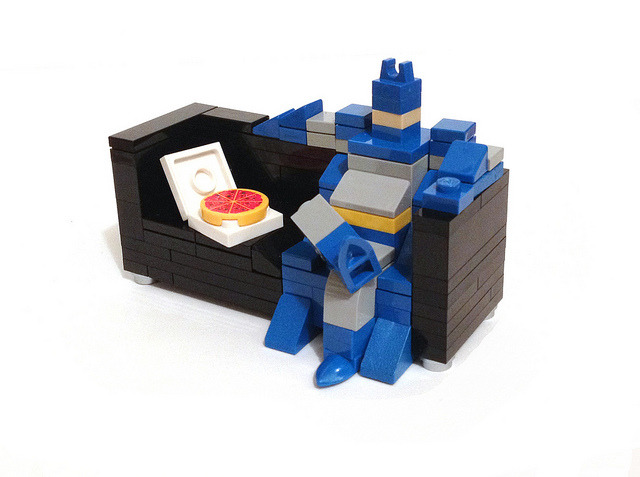
LEGO Sculptures That Portray Iconic Superheroes and Movie Characters as Lazy Couch Potatoes

laughingsquid:

‘What is Bayhem?’, A Visual Exploration of Director Michael Bay’s Style of Camera Movement, Composition, & Editing

el-lime-head:

WHAT THE HECK I DIDN’T REALISE THEY ACTUALLY DID THIS

multidjc:

jedisonic-x:

This was probably the greatest thing I’ve seen all day!!!

Ladies and gentlemen, my new favorite gif.

On becoming relevant to consumers

A company asked me for advice about innovation, relevance, and the consumer. This is what I told them. The entire advice sounds to me like a whole load of corporate speak and essentially things that they should already know, but hey, they asked.

===
Now, whatever the company does, few things are more important than its products, so if a company wants to be relevant to its market it needs to have compelling products, something that has the values and characteristics desired by the intended consumers.

Most of the time consumers don’t know what they want so it’s important for a company to take calculated initiatives to discover what consumers really want. You can’t just throw everything and the kitchen sink into the product because that would be highly inefficient and not to mention wasteful. It takes research and some difficult decision making to arrive at that product.

Product communications strategies always follow the reasons behind the product’s existence. Why was it developed and created? What sort of issues or pain points are the product meant to address? If a product is badly conceived, it’s never going to have a good story and while it’s not impossible to create a story post conception, it would be difficult. Stories sell products, it’s crucial to have a good story to push products to consumers.

A breakthrough to me isn’t always about something new but about achieving better ways to accomplish an existing task. Example, a bucket with a spout and a handle which makes it a much better bucket to use. In other words, through innovation. A breakthrough is something that changes the behavior of consumers.

Innovations aren’t always breakthroughs but a breakthrough is always born through innovation.

As to how [the company] can be more relevant, do a lot of product and consumer behavior research, find out their pain points as well as their pleasure points and work on a way to address them.

I don’t know how much input does [the local office] have in product development but having a fast follower strategy might help to address the gap with the market leaders but at the same time also develop a strategy to transition if the company manages to catch up with the leaders. Fast follower doesn’t work without anyone to follow.

On the Vimeo ban in Indonesia

Jakarta Globe asked for my views on the banning of Vimeo in Indonesia which started on Sunday, May 11 2014. Globe reporter Benjamin Soloway wanted to know what the effects might be to tech and innovation in this country, whether it would lead to other actions of the same magnitude, and what is going on with the inconsistency in its implementation. The following is my response.

Hi Benjamin, I actually wrote a piece about this a couple of days ago and some of my thoughts are already in that article, feel free to quote it.

The reasoning behind the decision to ban Vimeo, which isn’t the first time, is a slippery slope that I hope is going to come to a halt once his term as minister expires and a new, more progressive, more technologically sensitive government is installed.

The fact that a small range of nudity and sexually suggestive videos exist on a public service that does not actually promote such themes should not form the basis of a blanket censorship that involves the banning of the entire service.

It’s entirely possible that the very logic and reason that drove this decision will be used to block other services such as Twitter, YouTube, Tumblr, Facebook, Instagram, or even Google. You can easily discover porn and nudity on any of those services if you know the terms. These are content platforms for the public to use and the public will use them in any way they like.

Banning Vimeo entirely is affecting people whose livelihoods depend on having access to the service such as advertising professionals, students, educators, journalists, filmmakers, animators, and so on. We’ve seen agencies complain that their portfolios are now inaccessible. There’s a video going around of an Al Jazeera cameraman complaining that he cannot complete his task because the instructions were posted on Vimeo.

This decision to ban Vimeo entirely is akin to banning DVD players because there’s porn on DVD.

If Tifatul Sembiring or someone like him maintains the position as the highest authority on technology regulations in this country we are facing a brick wall with regards to tech progress and innovation

Back in 2008 when current education minister Mumammad Nuh was the communications minister he moved to ban YouTube because it had insisted on not removing Fitna, a movie that was deemed as offensive to Muslims.

In 2010 Sembiring threatened to shut down access to BlackBerry services because it’s possible to access porn using the device. How much more absurd can you get?

In 2012 he asked what would people do with a 4Mbps internet connection 

He asked a similar question in January of this year 

The tone that he used to ask the questions seemed so mocking and condescending that it was a shock that someone of his position would even pose them to begin with.

Back to the Vimeo situation, the inconsistency within the situation, the fact that APJII wasn’t included in the mailer, that not all ISPs and carriers received the instructions at the same time, that the implementation even within Telkom’s own network is extremely inconsistent speaks volumes of the quality of the organization and personnel.

The fact that a Kominfo director general was contradicted by the ministry’s newly appointed spokesperson within 24 hours says a lot about the coordination within the ministry.

I can only hope that the next government has no such people holding key positions.

Sorry it’s taken a while to form my reply, I’m trying hard to be civil. The very fact that the last two communications ministers have enraged me with their decisions makes it very difficult not to get emotional.

It’s almost like they have no interest in catching up with the best in the world as quickly as they can with regards to technological progress. When South Korea is already rolling out Advanced LTE and developing 5G wireless connection, we only just completed settling the 3G band allocations.