
Car sales in Indonesia jumped by 17% from 2010 to 2011, to nearly 900,000 new vehicles, and by 11% year-on-year in the first quarter of 2012, despite global economic gloom.
Indonesia’s market is growing faster than China’s much bigger one: car sales rose by only 2.6% in China between 2010 and 2011. Indonesians now buy more cars than any other south-east Asian nation, having overtaken Thailand last year. They also bought 8m motorcycles in 2011, a number that could rise to 9m this year.
This worries the government. From June 15th Indonesia’s central bank says it will require those who borrow money from a bank to buy a car to make a minimum downpayment of 30%. For motorbikes, the figure will be 25%. Housebuyers will also have to make a minimum deposit of 30%. The new rules are intended to prevent a potential bubble in consumer credit.
Category: Uncategorized
May the 4th be with you
Rock Band for iOS’s cancelation canceled?
EA sent a notice to all owners of Rock Band for iOS that the company was going to shut down the game on May 31st and thanked them for having been part of it. This naturally drew the fury of hundreds, perhaps thousands of Rock Band players on Twitter even though many are less likely to be still playing the game after years after it was released. Rock Band has been a successful franchise for EA. The series featured additional songs that gamers can acquire through in-app purchases.
When an online game becomes too much of a burden to support or has too few players, it’s natural to expect the company behind it to discontinue the game. Unfortunately for EA, the game apparently still has its fans and they flooded EA’s Twitter accounts in protest.
These players have paid for both the game and the additional content and the decision to pull support for the game when it was still on sale on the App Store was certainly baffling. As it turned out, EA later turned the decision around in a statement released to the public. The company isn’t shutting down Rock Band for iOS after all.
Despite the reversal, this highlights the peril of online games. In the past, video games that have been purchased can still be played years, or even decades later provided that the console set and the game cartridge are still operational. With online games, players are at the mercy of the publishers or the operators of the games’ networks. When the network is retired, so is the game.
On the other hand, most online games have offline elements as well that should still be playable long after the online component had been turned off and Rock Band is one of them. Having yanked support for the entire game when the offline part should still be playable is an odd choice to make.
Touch Arcade pointed out that EA’s support page does list Rock Band to be among the discontinued games but only for the online features. Polygon, The Verge’s Gaming blog even went further to highlight a part of the licensing agreement for the game which states that those who purchase the game only licenses the game and all elements contained within and if EA terminates the game, all licensed elements would cease to function. In other words, if EA decides to shut down the game, it is within its rights to shut down the entire game, not just parts of it.
As pointed out by Guardian, another online game publisher, ngmoco, is shutting down its own online game, Eliminate, which was one of the company’s first online games with in-app purchase elements.
All these simply serve to point out that online games are different from video games of old, which are isolated in nature from the rest of the world, not just in game play and enjoyment but also in its operation. Players of online games no longer own copies of the games that they have spent money on, instead, they only own a license to play them.
Tweet of the day
In other news, @Dropbox is launching a search engine. 🙂
— Drew Houston (@drewhouston) April 24, 2012
Hm, what happens if I put my Google Drive folder inside my SkyDrive folder inside my Dropbox folder on my Bitcasa volume…
— John Siracusa (@siracusa) April 25, 2012
Google Drive terms and conditions lets Google use your files even if you stop using Google’s services
From the terms and conditions:
The rights that you grant in this licence are for the limited purpose of operating, promoting and improving our Services, and to develop new ones. This licence continues even if you stop using our Services (for example, for a business listing that you have added to Google Maps)
Zack Whittaker on ZDNet takes this paragraph to mean that Google may own your files. I don’t quite agree on that, but of course, terms of service documents can be as clear or vague as the reader makes it out to be. I think the key in the last sentence is the word stop. Does stop simply mean ceasing to login or does it mean after you delete the account? Even further, does it mean Google can use your files even after you delete them from Google Drive?
A statement from Google doesn’t exactly answer my questions.
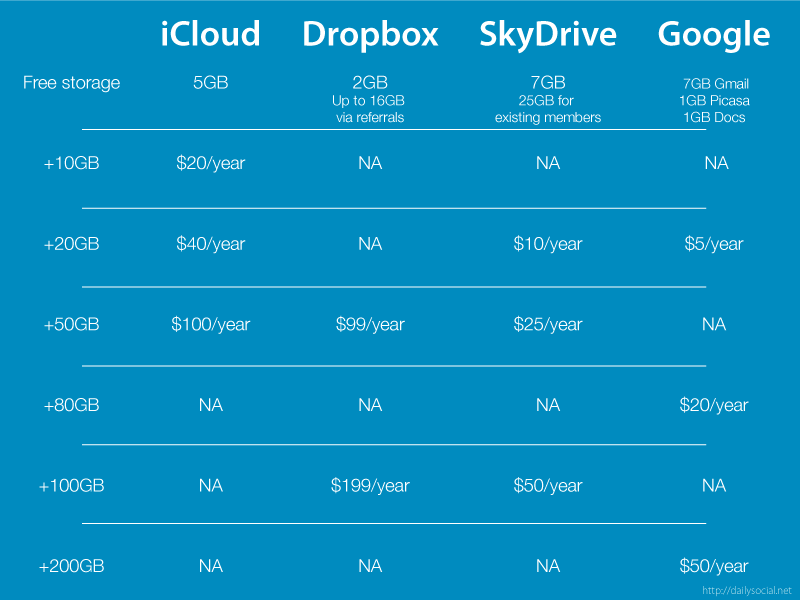
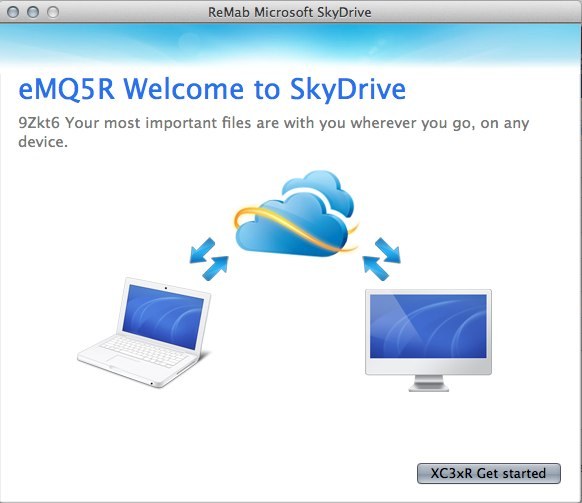
Something’s wrong with SkyDrive for Mac

Homeland Security is testing pre-crime screening
Minority Report may have been based on fiction but the US Department of Homeland Security is working really hard to make it happen. They may not have Agatha and the twins but they have all kinds of individual profiling as well as detection systems to turn this into reality even at only 70% accuracy.
The U.S. Department of Homeland security is working on a project called FAST, the Future Attribute Screening Technology, which is some crazy straight-out-of-sci-fi pre-crime detection and prevention software which may come to an airport security screening checkpoint near you someday soon. Yet again the threat of terrorism is being used to justify the introduction of super-creepy invasions of privacy, and lead us one step closer to a turn-key totalitarian state.
This may sound alarmist, but in cases like this a little alarm is warranted. FAST will remotely monitor physiological and behavioral cues, like elevated heart rate, eye movement, body temperature, facial patterns, and body language, and analyze these cues algorithmically for statistical aberrance in an attempt to identify people with nefarious intentions

