Long-time Engadget editor Paul Miller departs as AOL becomes the Dell of online journalism

bytethis:

On Friday Paul Miller resigned from engadget after more than five years at the high flying gadget blog. He was the first casualty of AOL’s insistence on pushing the “AOL Way” of doing business as it thrives to be an online media powerhouse. His reason? 

As detailed in the “AOL Way,” and borne out in personal experience, AOL sees content as a commodity it can sell ads against. That might make good business sense (though I doubt it), but it doesn’t promote good journalism or even good entertainment, and it doesn’t allow an ambitious team like the one I know and love at Engadget to thrive

The always brilliant Paul Carr over at AOL-owned TechCrunch puts Miller’s resignation in a satirical light and it is a must read. 

The AOL Way is a deck of presentation slides detailing the new policy and direction that AOL had recently introduced following its acquisition of The Huffington Post. The reason for this document is to dramatically increase page views by raising the number of published articles. This description, however, is putting things in an extremely simplified way.

What AOL wants to do is pretty close to what Demand Media is doing. It wants each story to reflect, or become, the kind of story that people look for. AOL wants to increase discovery through search by ensuring each piece fully conforms to SEO keywords and take advantage of the hot issue at any particular point in time to ensure the story gets as many hits as possible.

In other words, instead of promoting and enhancing journalism, AOL’s guidance is for its properties to become content factories, churning out stories and articles that maximizes profit ahead of quality. In other words, instead of becoming something like Apple, a design driven consumer electronics powerhouse that churns out highly desirable industry inspiring products, AOL wants to be the Dell of journalism. One that cranks out unimaginative products based according to what’s popular at that time. AOL is taking its properties, each one a leader in its respective areas, and turning them into followers.

Is giving people what they want a bad thing? Not necessarily but as Apple CEO Steve Jobs puts it, people don’t always know what they want. Two centuries ago people wanted faster and stronger horses, but Henry Ford thought differently, so he built automobiles instead.

Long-time Engadget editor Paul Miller departs as AOL becomes the Dell of online journalism
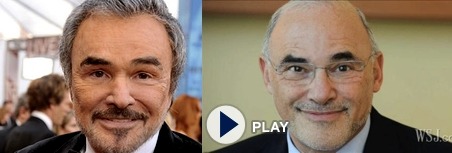
Separated at birth? That’s Burt Reynolds, actor, and Leo Apotheker, CEO of Hewlett-Packard

Should we blame Top Gun for the current state of the film industry?

That generation of 16-to-24-year-olds—the guys who felt the rush of Top Gun because it was custom-built to excite them—is now in its forties, exactly the age of many mid- and upper-midrange studio executives. And increasingly, it is their taste, their appetite, and the aesthetic of their late-‘80s postadolescence that is shaping moviemaking. Which may be a brutally unfair generalization, but also leads to a legitimate question: Who would you rather have in charge—someone whose definition of a classic is Jaws or someone whose definition of a classic is Top Gun?

Should we blame Top Gun for the current state of the film industry?

Classic catchphrases from TV

Apparently Hawaii Five-0’s revival evoked memories of catchphrases from television shows. Here’s a link to a collection of them, can’t tell if it’s exhaustive but there’s certainly a heck of a lot of them, some of which I didn’t realize came from TV and some I didn’t realize became catchphrases. At the end is apparently the origin of “Book ‘em, Danno”

“So Jack [Lord] says, ‘That way, Danno,’ or something like that. I said ‘What?’ And he said, ‘When I was a kid, I had a pal. His name was Dan. I used to call him Danno.’ That’s how Danno got started.

"Then, at some later point – maybe it was the end of the same show – he said, ‘Book ’em, Danno,’ and TV had a classic catchphrase.”

Classic catchphrases from TV

Apple’s Three Laws of Developers

yourhead:

  1. A developer may not injure Apple or, through inaction, allow Apple to come to harm.
  2. A developer must obey any orders given to it by Apple, except where such orders would conflict with the First Law.
  3. A developer must protect its own existence as long as such protection does not conflict with the First or Second Law.

— I. Developer

laughingsquid:

The Economics Of Star Wars

When Sukarno presented the five principles of Pancasila, heated arguments erupted, especially concerning the article about divinity, which later became “belief in the one and only God.” At first, Sukarno formulated this article almost as an afterthought — it was originally “ketuhanan yang berkebudayaan” (divinity based on cultural traditions), and as the last, not the first article of Pancasila.

I did not know that. – Jakarta Globe

lydiawantstodraw:

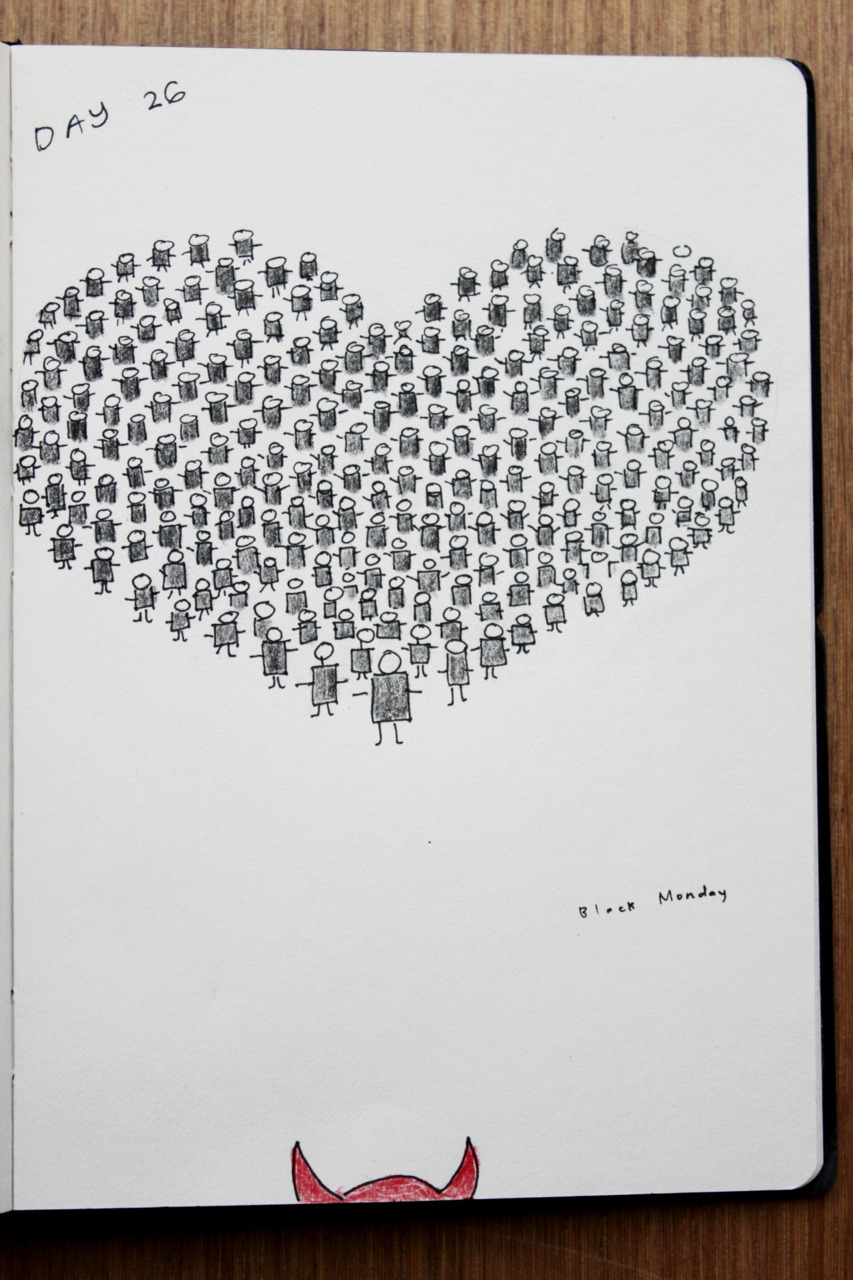
Day 26. Black Monday.

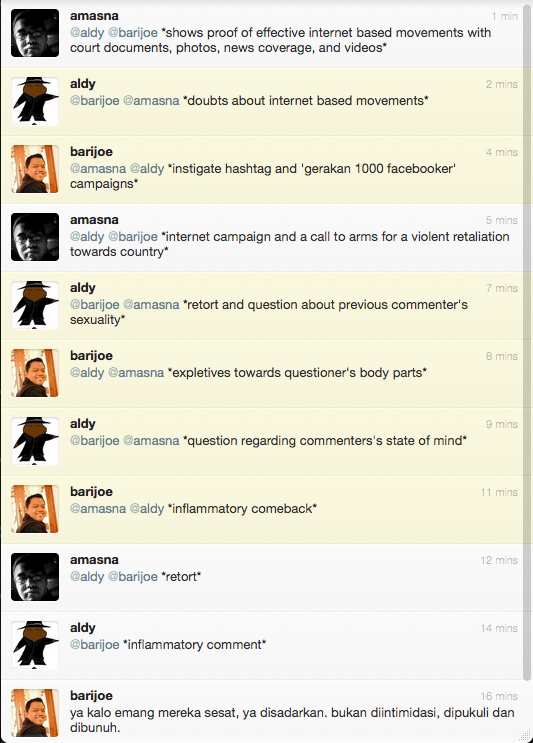
How arguments escalate. Read from the bottom up. There’s bound to be more (still ongoing) but that’s as far as my 800px screen can contain.

This is design culture? – image by Dan Saffer