Until April 2013, XL Axiata had a perfectly fine working mobile site which is meant to be used for mobile users to access their mobile accounts, check up on their usage quota, find out card expiry date and validity period, top up their credits, and purchase various data, voice, and text packages.

Sometime in the last week or so they changed the site to something that is not only downright unusable, useless, rubbish, a complete and utter mess, it is also entirely mobile hostile. Accessing this from Chrome on Android, which is among the best mobile browsers available, and is on a significant share of smartphones in this country, produces the above brilliant pieces of horse manure.

Don’t they test these sites on all the major mobile browsers before they go live?

So here are the six Oppo Find 5 photos that didn’t get uploaded yesterday. There’s a bunch of annoyances on the software side which takes points off from an otherwise great device.

Oh, and the camera isn’t impressive. Red tint galore when in relatively low light and the sensor produces photos inferior to the Galaxy SIII, which makes it even far more inferior than the Lumia 920. Although I think the SIII may have had a camera software upgrade over the past year. Photos from the SIII never looked so sharp before. Btw those photos of the Find 5 were taken using iPad mini.

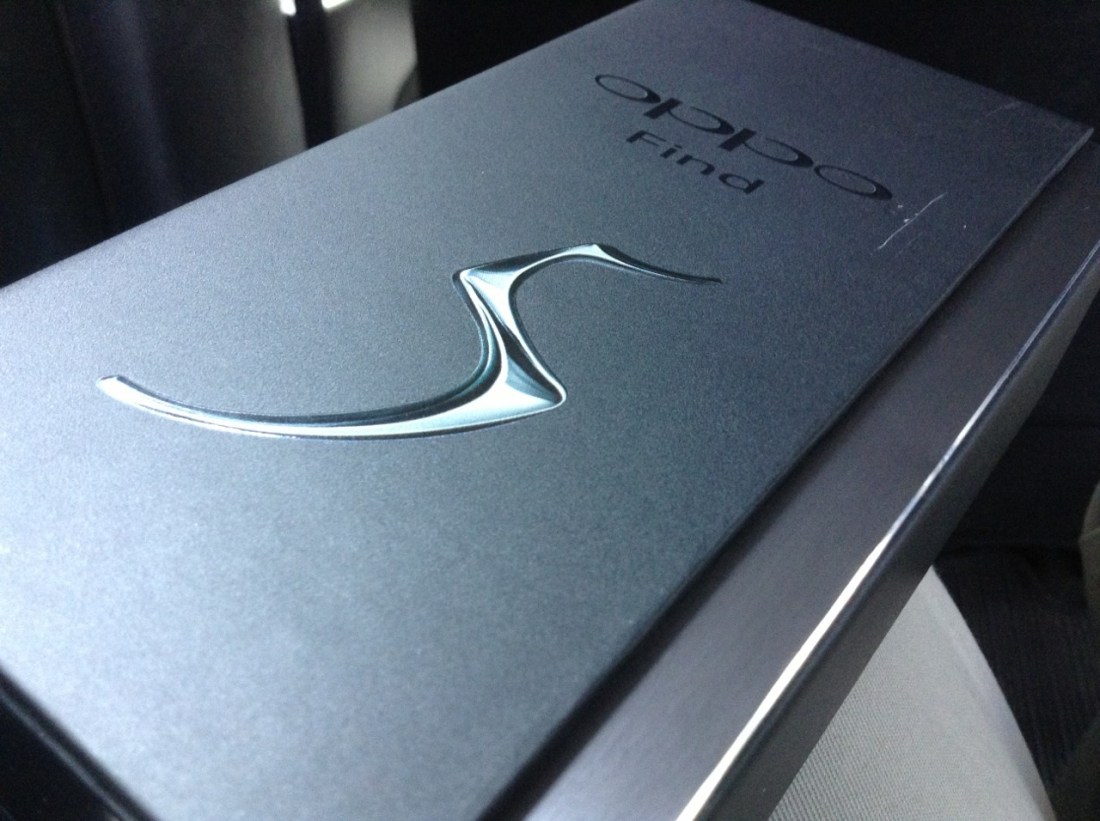
Unboxing Oddo… I mean Oppo Find 5

I haven’t seen a packaging this well done and this stylish in a long time. Oppo might be considered a rookie in this space but the company certainly knows how to make a first impression. Haven’t played with the phone much but it does feel pretty decent to hold. Still, I can’t get over the fact that it’s just big. I mean it is a 5” phone. Huge. Taller but thinner and feels lighter than my Lumia 920. Good placement of the power and volume buttons. Not keen on the custom icons and theme though.

Will write a review in the next several days.

[update] I have no idea why the other six photos failed to upload.

Thought via Path

For every one of those phone drop tests, they always have a fresh iPhone to destroy. If the different iPhone models are so universally acknowledged to be brittle, especially the iPhone 5, shouldn’t they benchmark it against a sturdier phone? Instead, they buy a new iPhone every time.

Oh, HTC released a new phone, let’s get that and a new iPhone to compare it with. Oh, there’s a new Samsung phone in the market. Let’s get a new iPhone to drop test alongside the new Samsung. Hey, Sony has a new Xperia out… see what I mean?

For each drop test video they do, these sites would buy a new iPhone, while Sony, Samsung, HTC, or other Android vendor gets one purchase each. Apple gets more out of these sites than each of the Android vendors do.

Funny huh? – Read on Path.

Political Party or Startup?

There’s a lot of similarities in founding startup companies and political parties in Indonesia.

Both require committed founders, lots of money, solid product, and aggressive member or user acquisition. Their eventual options are either to be one of the larger parties or they sell to one of the larger parties.

In political parties, the products are the legislative candidates carrying the belief and the idea that the party will make a difference and bring positive change to the people they meant to represent. Parties send candidates or evangelists who promise to bring about such change to gain voters and get these candidates to the parliaments to supposedly do what they say.

If user or voter acquisition efforts fail to deliver on time, the co-founders along with the board may decide to sell the entity and bring its users/voters to the acquiring entity in the hope that they don’t get too pissed off. The top executives may also decide to join the flock to ease concerns that the idealism would go away once the old entity disappears. Of course, having been built with various levels of differences in ideologies, implementations, and executions, there will always be friction and the post merger/acquisition results depend on how these are handled by the new team.

Regardless of the outcome, I’ve found the entire end to end process in both cases extremely similar in its core. Similar principles apply to both situations and similar theories also work in practice to solve the issues that they face. – Read on Path.

Coming clean, maybe: The Dan Lyons story

allupright:

Dan Lyons reveals the dirty truth of today’s media and the people who work in the industry:

I’ve… spent the past few years writing “articles” that were less and less interesting — they were basically just SEO chum thrown out onto the internet in hopes of catching traffic.

“Articles” is another way of saying “Everything I ever wrote about Apple before being able to escape to a corporate gig.” Why? Because Lyons was only able to generate traffic to websites when he published weird, misleading columns about the company. 

Bashing Apple was the only way Lyons could make it in the publishing world. Can you recall anything he’s written that didn’t involved Apple? Me neither.

Now that he’s no longer in that industry, Lyons can tell us what he was actually doing — writing for traffic, not truth.

Bad on Lyons for pumping out not-sincere perspectives on Apple all those years. Good for Lyons, realizing that his previous career sucked, and that he’s in a position to do something else. And yet…

Well, here’s the next thing he’s pursuing:

But in the last year or so, many have started finding work as journalists inside companies. That new appetite for “corporate journalism” makes it easier than ever for journalists to leave their posts. Intel, IBM, GE, Oracle, and countless others have hired reporters. Some companies have a blogger or two; others are building full-fledged news organizations.

He goes on to write:

The result is that these days a lot of good journalism is being committed outside the walls of traditional media companies. As my friend Kevin Maney, a longtime tech columnist at USA Today who bailed out of mainstream media a few years ago, has written, “Traditional media is increasingly a bad place for a good journalist to work.”

Note that, unlike Lyons, Kevin Maney is not saying he’s a journalist. Which means Lyons is either confused as to what his job really is, or he is — once again — misleading readers.

“Corporate journalism” isn’t journalism: It’s public relations (telling the world what you’d like it to believe) or corporate communications (telling your workforce what’s what, rah rah). 

Corporations hire former journalists — and have for years, this isn’t a new phenomenon — because they know how to communicate: Planning, composing, propagating messages. It’s a skill that is under-appreciated by most, but necessary as it becomes clear that executives and their support staffs aren’t masters of written English.

And, of course, journalists take these jobs because they need real wages and benefits. Amen.

But do not believe someone who tells you that he or she is a “corporate journalist.” He or she will be implying that he or she is something he or she is not. He or she will always be a mouthpiece of a company which ultimately is trying to sell you something. 

They’re not evil. But they are marketers. Understand that, question it, and you’ll be fine… especially if you end up reading Lyon’s work in the future.


Coming clean, maybe: The Dan Lyons story

they’re not sure whether they wanna make the app “serious” or “fun”. “fun” meaning they’ll be shit like profile pictures, background banners, rubber ducky, rope, chains, lubes, nuts & bolts, SBY.

UI designer with a two week deadline for an app

parislemon:

iheartapple2:

10,000 iPhones Domino

I almost have enough iPhones to do this.

Well that came true

//platform.twitter.com/widgets.js

The Verge has a good run through of the new features in Facebook 6 for iOS which includes chat heads and stickers. Watch the video if you can’t be bothered to read the post.

minimalmac:

Yep. Pretty much sums it up.

(via W&CIE)