xombiedirge:

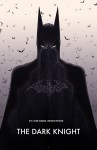
The Dark Knight Trilogy by Doaly / Facebook / Store

Artist’s notes: “My thoughts on the final poster was like the previous, to take a monologue from the movie and chart the characters progress. In this movie batman played the role of guardian of the city even when the city didn’t know how much he did for them. I wanted this to echo as part of the city itself and there’s a cheeky nod to the joker within the poster as you couldn’t have Dark Knight poster without him.”

So I just found out you can get YouTube to play on your TV through PS3 without having to pair anything. All the articles and videos I found talked about pairing your mobile device to the PS3 for this to work. That’s no longer necessary.

Funny thing is if I send a video from my iPhone to play on TV over wifi, the playback history gets sync’d to all other devices connected to the same wifi regardless of YouTube account. In other words, this is YouTube party mode.

Anyone can send and queue YouTube videos from any mobile device to the PS3 without needing to pair or use the same YouTube account. Just need the YouTube app installed and have everyone on the same wifi.

You can really mess up someone’s viewing history this way. This probably would also work directly with a TV that has wifi and YouTube app installed. – View on Path.

On Bakrie’s Investment in Path

Some facts about Path’s Bakrie investment.

Anindya Bakrie led this move.
$25 million is spread among eight investment companies.
Bakrie Global led the round, which means as an individual investor, the group put in the most money this time compared to the others.
Nobody is saying how much each investor put in.

Path has raised $65 million so far. $10 million in series A, $30 million in series B, and $25 million in series C according to Morin.
The $30 million was raised in 2012 at $250 million valuation, although AllThingsD said it was $40 million.
If it was a $40 million round, that meant $75 million raised total.
Path closed a $7 million down round (lower/flat valuation than previous) in late 2013 from a number of investors including Facebook co-founder Dustin Moskovitz. Not sure if this $7 million is included in the $25 million just announced.

The $25 million investment closed this month from Bakrie et al at a valuation higher than $250 million but not disclosed, possibly up to $400 million.
Path was looking to raise $50 million at $500 million valuation in July 2013.
TechCrunch reported In July 2013 that Path was negotiating with an Asian private equity group.
According to TechCrunch, Path actually closed that $50 million round but TC also reported today that the series C didn’t close until today. Conflicting reports.

This means Bakrie’s investment may be significant but doesn’t necessarily make it the largest individual outside shareholder and it’s share in the company isn’t as big of a deal as many Indonesians would make it out to be.

Cross posting this to my Tumblr and will include reference links here later. – Read on Path.

JUST RELEASED. The 13 Episode Titles of Season 8 of Doctor Who

bowties-and-souffles:

  1. How the Bloody Fuck Do You Fly This Thing?
  2. How the Fuck Do You Read This Circle Language?
  3. The Fuck is this Bitch With the Hair?
  4. I’ll Tell You Where to Fucking Put that Delete Button You Bugger Ass
  5. Fuck I’m Back in Bloody London
  6. God Mother Fuck Does BBC Have More Than Three Props?
  7. Or…

JUST RELEASED. The 13 Episode Titles of Season 8 of Doctor Who

hanniballecters:

JUST ONE QUESTIONDo you happen to know how to fly this thing?

Thought via Path

Right now the eyes of the world are looking at Indonesia. The country’s middle class is burgeoning, the growth of smartphone adoption is fast, e-commerce transactions are skyrocketing, social media usage is off the charts, entrepreneurs are everywhere though mostly are hidden from surveys and mostly don’t seem to be interested in growing beyond being home businesses.

If you wanna be the source of news about what’s happening in Indonesia’s digital landscape for the world to read, would you publish in Indonesian or in English?

I think the answer to that is obvious and doing it any other way would be foolish. – Read on Path.

So these guys, who promised LTE connection of up to 72Mbps (yeah, half the expected speed of current commercial LTE deployment) have to postpone activations until further notice.

They had planned to launch by mid December but yesterday sent out notices on Twitter saying that they can’t do that now because its network isn’t fully ready yet. What I’ve heard though, is that they haven’t actually finalized the operational license from the government.

Given the nature of the Indonesian government, especially the telco lobby and the comms ministry, I wouldn’t be surprised if there was foul play involved because what they’re offering is extremely competitive and has a good chance of beating the telcos in the mobile broadband space.

AFAIK Bolt has no telco license because they don’t offer telco services, only mobile data, which should qualify them as an ISP. Worth noting that Indonesia has no commercial LTE deployment at the moment and telcos may not be able to until 2017 due to lack of available frequencies. The only available frequency that currently can be used for LTE (2300Mhz) isn’t supported by most existing LTE devices.

Twitter Backflips on Block Policy

Twitter today made changes to how the block function works in a way that seems counterintuitive and perhaps even the exact opposite of what it had been previously. The change essentially acts as an earplug rather than a barrier which separates people from accounts they don’t wish to interact with. A few hours later though, the company backed down.

The new policy, which came into effect immediately and without public notification, allowed blocked accounts to see, follow, and interact with the accounts that block them, except that the blocked account won’t be able to see or know that. It effectively performs a mute function rather than a proper block. Why Twitter didn’t just rename it to “mute” is unclear because the action obviously performs what a mute function is expected to do.

By changing the block function to the new behavior, it meant that stalkers or people with malicious intent can far more easily monitor their target, keep track of them, store their tweets, distribute, or use them as they wish.

//platform.twitter.com/widgets.js

Preventing Retaliation Twitter told TechCrunch that the new behavior was designed to prevent retaliatory actions. When a person is blocked, they would know it when they try to visit their target’s profile because Twitter would tell them that they are unauthorized to do so. Apparently there have been instances in which this led to elevated and and extreme responses although the company did not provide more specific examples. Twitter also reiterated the point that tweets are public and therefore can be seen by everyone.

On one hand, Twitter has a point. Blocked people have always been able to see tweets from people who block them by going directly to the target account without logging in, which can easily be done from any web browser. They can also create other accounts, with varying inconspicuous names, to follow them again.

However, tracking tweets without logging in severely limits a person’s activities to merely viewing and perhaps taking screenshots of the tweets. They won’t be able to interact with their targets on Twitter in any way at all.

When people use different accounts to follow their targets, sooner or later their activities will be noticed and they will subsequently be blocked again.

Derek Powazek perhaps said it best in explaining how the new block works.

//platform.twitter.com/widgets.js

This leads people to form an opinion that Twitter is siding with the stalkers and abusers by letting them do what they wish and making them invisible to the target or victim.

//platform.twitter.com/widgets.js

Twitter’s position seems to be that ignorance is bliss. What they don’t know won’t hurt them.

//platform.twitter.com/widgets.js

//platform.twitter.com/widgets.js

Reverting the block In less than five hours though, Twitter reversed its decision and reverted nearly all the changes to the blocking function it had implemented.

Twitter’s VP of product Michael Sippey posted on Twitter’s main blog emphasizing that the changes were made to prevent post-block reactions which can be far more severe than pre-block abuse but the company decided to turn back on its decision because the backlash #restoretheblock had been so overwhelming, there was even a change.org petition.

In all fairness, neither solutions are ideal. One has the potential to spark severe reactions, even offline, another lets abusers roam free around their targets. The Twitter crowd certainly prefers the prior block behavior because it allowed a more immediate control over who can interact with them at the risk of retaliation, expecting that such a risk may be relatively low.