
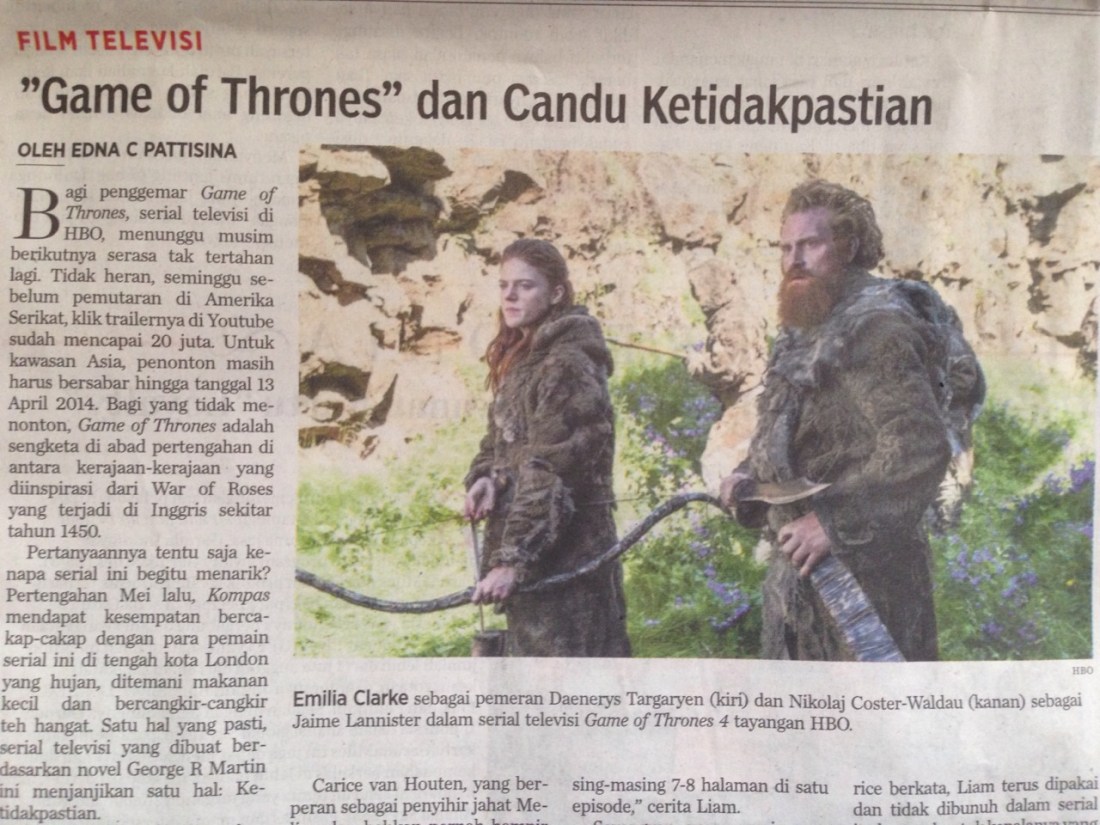
According to Indonesian newspaper Kompas, that’s Daenerys Targaryen and Jaime Lannister.
According to Indonesian newspaper Kompas, that’s Daenerys Targaryen and Jaime Lannister.
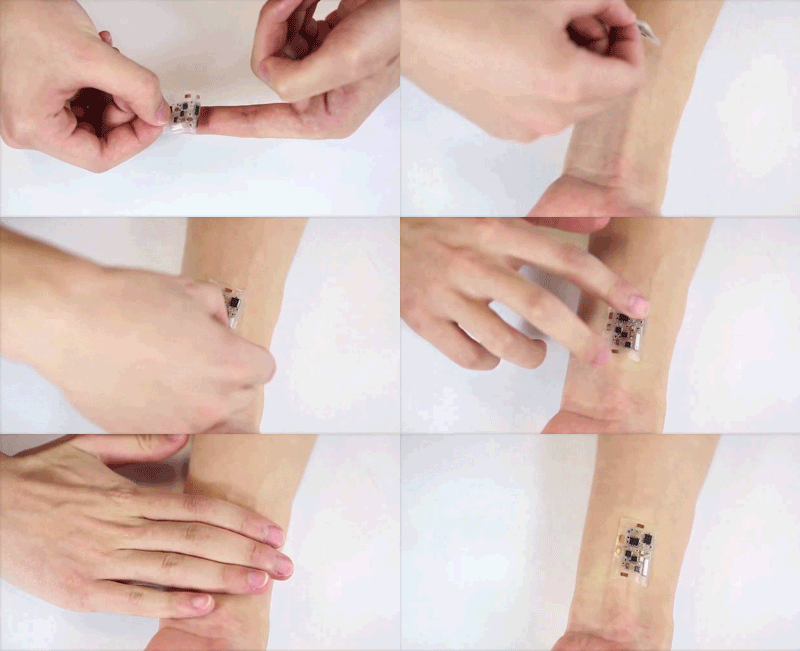
Stick-On Circuit Could Put Your Phone On Your Finger For Pocket Change
Related to my previous post, this would convince me the wearable era is progressing faster than perhaps most people expected.
I haven’t worn a watch since the year 2000 but prior to that, four or five years went by when I didn’t wear a watch. The last time I remember wearing one regularly was back at high school when my gym teacher always shouted in my ear to remind me to take it off during gym class. So after a few weeks, I decided to just dump the watch.
At first it was noticeable, not having a watch on my arm, but it didn’t take long before I got used to it. There were clocks almost everywhere I go and there’s always someone to ask for the time when a clock wasn’t around, so it stopped becoming a big deal.
Not having a watch was made even less significant when I got my first mobile phone upon starting university. The phone lasted several days on a single charge, unlike today’s smartphones, and it was always on. I didn’t have to bring a charger anywhere. A portable battery pack was unheard of, perhaps even laughable at that time.
Fast forward to 2011 when I began to stop wearing glasses and made the switch to contact lenses. The fundamental issue with both the glasses and the watch is that you simply have to take them off and put them back on from time to time depending on your activity. Maybe for some people this isn’t such a big deal, but for me it is. You can put it down to being forgetful but I’m one of those people who probably would accidentally leave his head if it wasn’t attached.
In university I had to tape a sign at the door of my apartment to remind me to carry my wallet, monthly tram/train tickets, keys, and phone. There had been countless times prior to that, and even a few after, that I had managed to leave the house without my ticket, my wallet, or my keys. I don’t recall leaving anywhere without my phone though.
Since 2010 though, I’ve managed to lose two iPhones and left one in the cab while on an overseas trip (thankfully it was returned), although I haven’t lost another one so far.
Which brings me to the growing trend in wearable electronic devices. Anyone remember those slap bands that you put on your wrists? The ones that served absolutely no purpose whatsoever other than being flashy accessories? I hadn’t seen one since the 80s until recently at a toy fair.
Anyway, the whole notion of putting something around the arm feels very unnatural and unnecessary to me regardless of the purpose. Sports bands offer measure your physical activities, track your run, and some other supposedly useful bio analytics. I’m not a runner and I don’t feel a pressing need to have my physical activities tracked and measured, no matter what anyone says.
Mobile phone makers are also trying their hands at making multipurpose armbands that not only tell the time but also serve as an extension of your smartphone. Is pulling a phone from your pocket that much of a nuisance to you? Is it such a terrible exercise to flick your mobile-phone-holding hand to see the screen that you have to put a proxy device on your arm to save you a single movement?
Sure, it may help locate your phone when you can’t find it or give you information when the phone is tucked inside your bag and you’re on a bike run or doing some other activity, but when these things run out of power around the same time as your phone, then what’s the point? Why bother?
I’ve given up wearing glasses in favor of contact lenses to save me from having to locate my glasses each time I take them off. Some of you will scold me for this but I don’t take my contact lenses unless I’m off for a swim. Even then I sometimes forget until I realized my vision was suddenly blurry upon resurfacing from the water. I take them off once in a while to clean them but they go back on soon after.
I’ve gone through about half a dozen glasses over 20 years having broken them accidentally each time. One or two even broke a number of times. Similar to my experience after not wearing watches anymore, after a few months, I’ve simply grown used to not wearing glasses and in the occasions that I had to, they felt really uncomfortable.
Which brings me to the head gear. I’ve had an opportunity to use Google Glass. Having that wrapped around my forehead is even worse than having to wear glasses. Maybe one day this sort of device will be more akin to regular glasses than the additional attachment that we’re familiar with today, and then people won’t feel that these things are too alien or too intrusive anymore. Maybe they will be embedded into future contact lenses.
In any case, these wearable gears at this point don’t really present that much of a value to most people as their creators and proponents would like you to think.
By no means am I a laggard. My entire life has been lived surrounded by electronic gadgets from game consoles to video players, laser discs, home stereo systems, portable music players, to desktop and mobile computers, to feature phones and smart phones, and I’ve even tried Oculus Rift.
Every consumer goods manufacturer will want to try their hands at making wearable devices that would work, and a handful of them will make millions from people who think that they need them. But at this point, I haven’t seen a real value out of those devices. They don’t present that much of a use other than as vanity accessories, unlike the iPhone after Apple introduced the App Store. At that point the smartphone had been around for almost ten years, all terrible devices.
Maybe we’re still at the very beginning of the wearable computer era, a time when everyone is still trying to figure things out. A time when you still would end up looking like a Borg when you wear them.
Let me know when they’ve managed to build holo projectors and the holo suite.
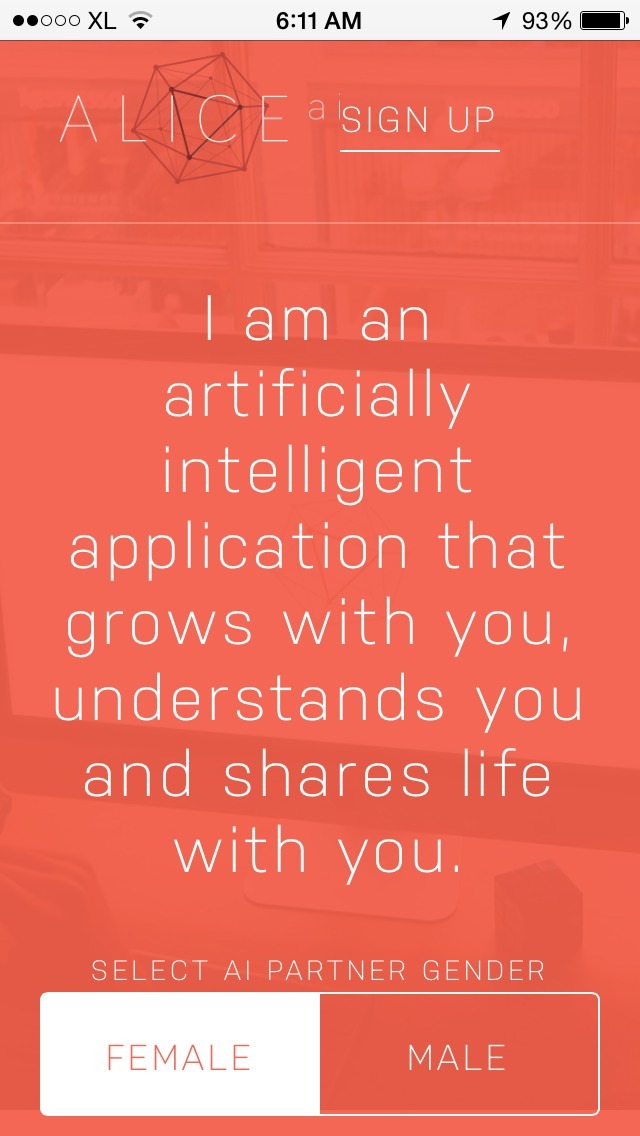
So Couple had this for April fools
They posted this and the corresponding blog post on March 31 but the email announcement didn’t arrive in my inbox until this morning. Almost a week late. In the meantime, on April 2 they put up another blog post saying that Alice, and her male version Alex, had discovered each other and ran away, leaving only a chat record of what happened.
You can go to http://couple.me/alice to see the intro. The whole thing does look straight out of the movie Her, except you don’t get Scarlett Johansson’s voice.
That’s cute.
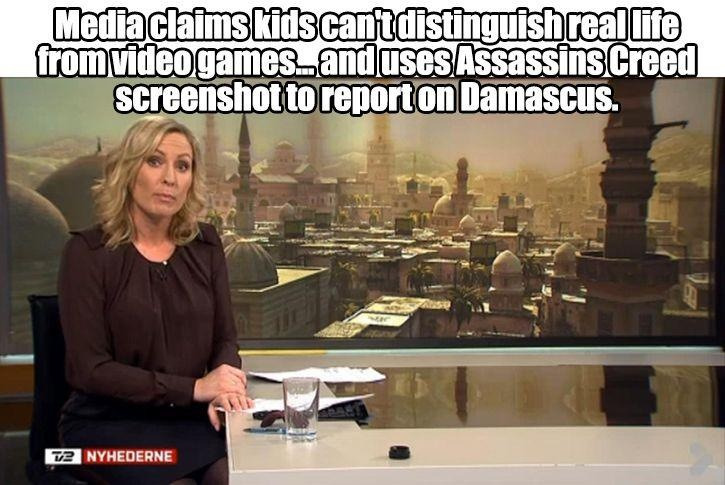
I found this, so I thought I’d chime in on this.
YOU HAVE GOT TO BE KIDDING ME
Yup, it really happened.
I had this drafted for a Path post but what the hell, I’ll put it here instead. Probably going for a longer post some other time.
Messaging apps are a dime a dozen and there’s zero financial cost of switching or adopting one app over the other although it’s always about who’s on which service. My latest post on DailySocial about the subject addresses this fact. It’s so easy to sign up to and use each one, it’s no big deal to have multiple messaging apps installed although some people may prefer to stick to one or no more than two or three to keep things simple.
Me, I try almost any of the major apps and each app has different groups of people using it. For most work contacts I use email while Facebook Messenger, Path message, and Twitter DM are used interchangeably depending which one is the easiest to use to contact the other person. iMessage and FaceTime are for people who also use iOS. I also use Couple with my girlfriend, it’s a fun little app just for two.
Funny thing is the supposedly more popular apps like Line, KakaoTalk, and WhatsApp don’t see that much use from me but they do get used regularly with certain people who are on those services. I also use Telegram with a limited set of contacts. Kakao is getting more interesting though. I’m thinking of exploring it for group chats and coordinating things with people. Apparently it even has a voting feature which is really neat and surprising. Considering it for communications for future projects.
For internal comms at work, we use Slack. It’s really easy to use and practical, but perhaps due to the tech it uses to connect, it has connectivity delays that forces me to wait for up to a minute before I can send a message or sometimes it even freezes, forcing me to kill and relaunch the app.
So yeah, that’s the list of messaging apps I use. It changes over time depending on priorities and practicality obviously. For example, I used to use Google Hangouts until last year but not anymore. The app on iOS is unstable and just terrible to use. I’m also weaning off Skype, that horrible, horrible app that’s completely unreliable.
In the world of ad-supported media, traffic volume is everything. Too often that means sacrificing quality for quantity and prioritising stories that generate clicks. In the subscription world, quantity doesn’t move the needle. Quality does.
The Australian Associated Press emailed me asking my views on the role of social media in this year’s Indonesian elections and the role of digital natives as first times voters.
My long answer below
I don’t think social media can make or break a candidate by itself. Presence on social networks certainly help raise their profiles but it also opens them up to attacks.
While use of social media in Indonesia seems massive, the majority of things I see about this upcoming election and even Indonesian elections in the past, is about making fun of elections and candidates.
The primary driver of political campaigns remains television. The influence of TV is still significantly much larger than the likes of Twitter or Facebook but TV and other “traditional” media also take their news from social media, therefore social media presence and activities can help spearhead the image or intention that the candidates want to project. Television can amplify what is being said or what is happening on social media.
Look at the publicity on Aburizal Bakrie’s trip to the Maldives for example. That trip from four or so years ago first made the rounds on YouTube and Twitter a few days ago and within hours it was picked up by television as well as online news media and became a national talking point by the end of the day.
That being said, conversations on social media are also being driven by what is happening on TV so you have that full circle of coverage and talking points from both media amplifying each other until the masses are tired of the subject and move on to the next topic.
Another example is Farhat Abbas. The one time presidential hopeful and legislative candidate was on Twitter until recently, perhaps to deliver his campaign promises, to create a more popular image of himself, and to address people who talked about him. Ultimately it was a failed experiment because everyone saw right through him. His actions that had been reported across all media were amplified and ridiculed on Twitter so much that he eventually shut down his @farhatabbaslaw account, although as it turns out he reactivated it several days later.
The success of Jokowi and Ahok may have been driven by social media but to my eyes, the real driver was the relentless coverage on TV and newspapers about their campaigns and activities. Perhaps the final kicker was the flashmob at Bundaran HI shortly prior to the gubernatorial election day in 2012.
What’s good about this election is that the rise of software developers taking advantage of Pemilu API, which is the publicly available access to the KPU data about all of the legislative candidates and their parties. Spurred on by Perludem, these mobile applications and websites may not be massively popular but they provide far more useful and easier to access information so that the voters are better informed about their options.
The digital natives, in other words, people who are far more comfortable with the internet, mobile devices, and appications, most of which happen to be first time voters, apparently are increasingly looking for election information from the internet. They will scrounge news and info not just from social media but also from news websites and other sources including applications. It’s up to them to decide how to filter and process all that information.
Google is known to have provided a central repository of election news and information for other countries in the past and it’s just a matter of time before they launch an Indonesian version of it. It’s a bit of a shame that they haven’t so far with the election being so close now, just a matter of days. – Read on Path.

camh:
Welcome to the future.
Turn your hand over, dummy, you have an email.
Why are you looking at your watch while you’re holding your goddamn phone you dipshit. Look at your phone. Not the watch. The phone.
Fine. Be that way. Touch the watch with your only hand without technology. Consider buying another phone for your non-phone hand. Perhaps it’s lonely without a phone to hold.
You recorded this with your Google Glass, didn’t you?
Why am I even asking, of course you did.

 AuliaSays